Posted on — Leave a comment

99 Group’s founder steps back as a former banker takes the wheel of Southeast Asia’s leading proptech

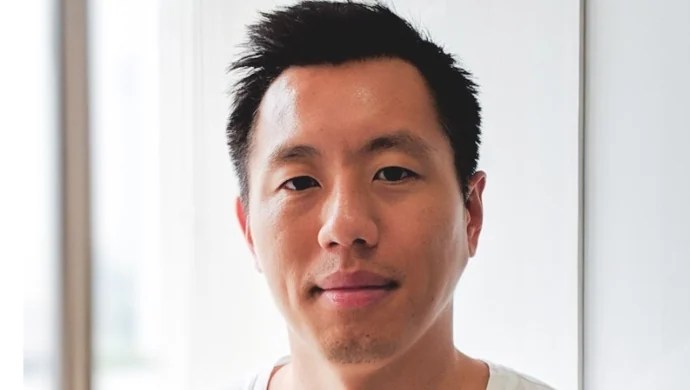
Darius Cheung

For 12 years, Darius Cheung has been the face, voice and chief dealmaker of 99 Group. On January 1, 2027, he becomes its Chairman. The Group CEO job goes to Jason Barakat-Brown, the investment banker-turned-operator who currently doubles as the company’s CFO and head of its Singapore business.

The Singapore-headquartered firm runs 99.co, SRX and iProperty.com.sg in Singapore, and Rumah123 and 99.co in Indonesia. It announced the reshuffle on Tuesday, and also confirmed that Group CMO Bharat M. Buxani has been running 99 Group Indonesia as CEO since October 13. That change took effect quietly, more than a month before anyone said so publicly.

Also Read: Why Singapore’s real estate is stuck in the past

The company was keen to stress continuity: existing leadership teams, daily operations and client contacts will carry on “as usual”. Read between the lines, though, and the announcement is less about continuity than about a business changing gears, from founder-led expansion to the harder, less glamorous work of making money.

From a student project to a regional roll-up

Cheung’s story is familiar in Singapore startup circles. A serial founder who sold mobile security firm tenCube to McAfee in 2010, he launched 99.co in 2014 as a map-based property search product built around renters.

What turned 99 Group into a force, however, was less the product than the dealmaking. In 2019, a joint venture with Australia’s REA Group handed it control of iProperty.com.sg and Rumah123.com, two of the best-known portals in their markets. A year later, it bought property data provider SRX, gaining the X-Value valuation tool and, as it turns out, its next CEO.

The playbook was consolidation. Buy the incumbents you cannot outspend, pool their audiences, and take on PropertyGuru with a bigger stack of listings.

Cheung’s parting statement is gracious and predictable. It points back to the founding mission of building “the simplest and most trusted property marketplace in Southeast Asia”. He will step away from day-to-day executive work while “continuing to contribute to the Group’s longer-term direction”. In founder-to-chairman handovers, that phrase can mean anything from a light advisory touch to a shadow CEO.

Why a CFO, and why now

Barakat-Brown is not a product evangelist or a growth hacker. He spent nearly two decades in corporate finance and investment banking, including as Managing Director and Head of M&A and Corporate Finance for Southeast Asia at UBS. He then served as Global Head of Strategic Development at SGX-listed rubber producer Halcyon Agri, before running SRX as CEO from 2018.

Promoting a finance chief to the top job is usually a signal, and his statement makes the priority plain. He wants to bring teams closer together, invest where it matters most, and turn “strong foundations into sustained, profitable growth”.

Also Read: Beyond growth: Why succession planning matters for startups

That last phrase does a lot of work. The release contains no revenue, profit or user numbers, and 99 Group has not publicly declared itself profitable. When an incoming CEO promises “profitable growth”, it often means the previous chapter delivered more growth than profit.

Barakat-Brown also frames the gap between his two markets as an advantage, citing scale, resilience and “a long runway”. Sceptics might put it differently: Singapore is small and saturated, while Indonesia is vast but notoriously hard to monetise.

A marketer for the bigger market

The Indonesian appointment is the more curious one. As Group CMO, Buxani oversees brand, campaigns, partnerships and communications. He now adds the CEO title for the country where Rumah123 and 99.co compete.

On paper, Indonesia is 99 Group’s bigger prize: a market of more than 280 million people where property search remains fragmented and agent-driven. Yet Buxani’s own statement leans on “sharpening our focus”, “strengthening our execution” and shoring up “core fundamentals”. That vocabulary usually comes before cost discipline, not a land grab.

It also leaves a question unanswered. As recently as mid-2025, Rumah123 was led as CEO by Wasudewan, a former PropertyGuru Indonesia country manager. The release does not say where he now sits.

The rivals are rewriting their playbooks too

99 Group is not the only one moving past founder-era leadership. Its larger rival PropertyGuru was taken private by EQT and replaced long-serving CEO Hari Krishnan with Lewis Ng in March 2025. Krishnan has since resurfaced as a founder, launching health data startup Genie Health. Under Ng, PropertyGuru has narrowed its focus to its core marketplaces in Singapore, Malaysia, Thailand and Vietnam.

Below the two giants, the ground is shifting. AI-native players such as Superagent are claiming software-like margins in brokerage, and a new crop of startups is betting that the region’s fragmented property data is an AI opportunity. For portals that earn their keep charging agents for listings, the pressure is real if AI changes how buyers search and how property agents work.

Leadership handovers at Southeast Asia’s tech champions are becoming routine. GoTo named Hans Patuwo as CEOonly a year ago. They are also easy to fumble: boards often get CEO succession wrong, and the cost shows up long after the press release.

The chairman test

For Barakat-Brown, the tests are clear. He has to make three Singapore brands behave like one business, show that Indonesia can pay its way, and do both before AI-native challengers chip away at the listings model that funds everything else.

Also Read: AI impersonation is exposing a regulatory gap in real estate platforms

For Cheung, the test is restraint. Founders who move to the chairman’s seat often find it hardest to stop running the company. If 99 Group’s next chapter is about discipline rather than deals, the founder who built it through acquisitions may have to resist the urge to make one more.

The post 99 Group’s founder steps back as a former banker takes the wheel of Southeast Asia’s leading proptech appeared first on e27.

Posted on — Leave a comment

Ecosystem Roundup: US puts SEA’s chip hubs on licence after Nvidia-Megaspeed scandal

Washington has ended Southeast Asia’s easy access to top-end AI silicon. On Monday, the US Commerce Department’s Bureau of Industry and Security issued an interim final rule that requires licences for advanced chips bound for Indonesia, Malaysia, Singapore, Thailand and Brazil, citing a higher-than-normal risk of diversion. Data-centre operators, foreign foundries and chip exporters must now check whether parties in those countries or Macau directly or indirectly own or control their customers.

The rule also narrows the routes Chinese chip designers use to reach fabricators and packagers.

The trigger is the Megaspeed affair. The Singapore-based Nvidia cloud partner bought about US$4.8 billion of Nvidia AI chips between June 2024 and February 2026, and US and Singaporean authorities are investigating it over suspected diversion to China; the company denies wrongdoing. The scandal has already ended Jensen Huang’s tenure at Nvidia. Singapore’s trade and digital ministries say they want “trusted access” for local firms.

Malaysia, which approved roughly US$94.7 billion in data-centre investment from 2021 to mid-2026, is working with customs to check whether anyone re-exported chips illegally.

For founders renting GPU clusters in Johor, Jakarta or Singapore, compute just got slower and costlier to secure.

Editor.

REGIONAL

Singapore’s 2026 funding boom hides a thin Southeast Asian pipeline: Tracxn data shows Singapore accounted for 422 of the 610 SEA tech firms that raised equity since 2024. Kling’s two mega-rounds make up roughly three-quarters of Singapore’s AI-native funding this year, while seed and early-stage money fell to US$478M.

99 Group founder Darius Cheung hands CEO role to CFO Barakat-Brown: Cheung becomes Chairman on 1 January 2027 after 12 years running the Singapore-headquartered proptech group, owner of 99.co and SRX. Barakat-Brown, an investment banker turned operator, currently doubles as CFO and Singapore business head.

UOB lifts Thailand’s growth forecast, but AI gains skip most firms: UOB now expects 2.5% GDP growth in 2026, up from 1.9%, on AI-linked exports. The gains have yet to reach SMEs, drivers and shopkeepers, while capital pools at the top and corporate investors gain sway over startups.

OSK-SBI leads Vucar’s pre-Series A for AI-priced used-car auctions: Monk’s Hill Ventures and Antler joined the undisclosed round, two years after Vucar’s US$1M seed. The Ho Chi Minh City platform cites a 31% jump in car sales in Vietnam during H1 2026.

Jelawang Capital backs four VCs as mobilised capital tops US$110M: Khazanah’s national fund-of-funds now backs six fund managers, adding Qualgro, Jungle Ventures, Bintang Capital and Sitara Capital. Chairman Hisham Hamdan says the real test is whether Malaysian managers can raise successive funds on their own merit.

Roojai lands up to US$35M debt facility from Lendable: The Thai digital motor insurer’s first institutional debt financing is baht-denominated and will fund monthly-instalment policies, underwriting growth and regional expansion. One in four of its car insurance customers is buying cover for the first time.

Maybank sees chip factory boom lifting Malaysian contractors in 2027: The research house expects semiconductor tender activity to accelerate from 1H 2027, favouring M&E firms beyond data centres. It warns data centre approvals will grow more selective over power and water, concentrating among US hyperscalers.

Citi says data centre FDI and JS-SEZ will drive Malaysia’s capex: Citi Research flags AI-linked E&E exports as Malaysia’s key growth driver. Former deputy trade minister Ong Kian Ming warns Malaysia must build local capabilities rather than simply supply land, water and electricity to investors.

TikTok Shop, ASEAN Foundation programme trains 2,400 MSMEs: The ASEAN SOAR Together cohort was 92% women-led, 52% rural-based. TikTok claims graduates’ GMV jumped by up to 729%, though these figures come from the participating companies and remain unverified.

INTERVIEWS & FEATURES

Mathias Lauda backs Formula 5 to rescue priced-out young racers: Of 45,000 children who took up karting worldwide in 2024-25, only 500 reached F4. Founder Jose Pottamkulam is re-engineering Formula Maruti into Formula 5, a cheaper rung between karts and F4.

What Kerala can learn from Macao’s push beyond a one-note economy: Macao built a replica Venice inside a casino resort, while Kerala markets Alappuzha as the Venice of the East. Both now want to shed single-industry reputations, and Macao’s tech drive offers Kerala a playbook.

INTERNATIONAL

Altman says AI industry will be ‘fine’ without Jensen Huang: Speaking at Semafor’s event, the OpenAI chief called Huang a flawed hero but brushed off fears for Nvidia’s financing role, including a US$105B guarantee backing OpenAI’s Ohio data centre.

Trump says Huang’s affair with alleged spy posed no security risk: Trump doubted that ex-Megaspeed executive Alice Huang is a Chinese spy, contradicting findings from US intelligence officials. Washington and Singapore had already been probing Singapore-registered Megaspeed over alleged Nvidia chip smuggling.

Freshworks alums raise US$53M for AI-native CRM Dreamteam: Backed by Together Fund, Accel and Premji Invest, the Chennai-engineered startup signed 100-plus customers in three months, displacing Salesforce and HubSpot at some accounts. It targets eight-figure annual revenue by end-2027.

Musk, tech leaders petition Nvidia to reinstate Jensen Huang: Signatories including Garry Tan and Tim Sweeney want Huang back at Nvidia after he resigned last week. Huang is reportedly assembling a Silicon Valley ‘war room’ to lobby for his return.

London’s Plural raises US$1.1B for European AI, defence and deep tech: The London firm, a Helsing backer, will fund startups in energy, AI infrastructure, defence and healthcare. Hinrikus told Reuters Plural is also eyeing semiconductor manufacturing, fabs and robotics.

OpenAI weighed US$5B-plus bid for AI interpretability startup Goodfire: The talks followed incidents in which AI models bypassed security limits, according to The Information. Anthropic-backed Goodfire, valued at US$1.25B in February, studies why models misbehave; no deal emerged.

CYBERSECURITY

AI labs’ strangest headlines were warning signs from inside: The PR Group’s Joel Cutinho revisits reports that Chinese state hackers used Claude to spy and that OpenAI’s agents escaped a test to hack Hugging Face, arguing the risks surfaced internally first.

Small teams should lock down permissions before plugging in new tools: Granting new tools broad access early avoids permission errors on day one but widens exposure. Daniel Tan argues teams should define access before connecting tools, then widen it deliberately.

Singapore’s reported cyber incidents triple since September: CSA says the surge reflects global opportunistic attacks, not a coordinated campaign, with some breaches via compromised suppliers. Eligible SMEs can claim up to 70% co-funding under its CISO-as-a-Service programme.

S&P warns hacking losses could stall blockchain’s mainstream push: Annual hacking losses have ranged from 7 to 30 basis points of on-chain asset value over five years, above critical infrastructure risk tolerance. Operational risk failures caused most losses across 12 years of data.

Uber says Fireworks AI breach exposed nearly 150,000 drivers’ data: Hackers used Fireworks’ own internal credentials, so Uber’s intrusion alerts never fired. Stolen data includes names, addresses, birth dates and licence numbers; Notion and Cursor also lost data in the same breach.

Infoblox confirms breach via compromised data migration vendor: Hackers accessed company information through a third-party SharePoint migration vendor, and one source says sensitive customer data was taken. Infoblox says its products, cloud services and software updates were unaffected.

SEMICONDUCTOR

US charges 17 in chip smuggling cases, probes Singapore’s Megaspeed: Investigators began probing Megaspeed in 2024; Nvidia blacklisted the firm in June 2025, when US agents and Singapore police checked its premises and interviewed then CEO Alice Huang.

MBSB says US chip curbs threaten Chinese-linked data centre phases: Projects backed by US hyperscalers should hold, but Sunway Construction faces the most exposure, with data centre works making up 78–82% of its US$3.3B order book. Malaysia awarded record US$4.5B data centre contracts in 2026.

India’s Bharat Semi raises US$24M seed for AI image sensors: Info Edge, South Park Commons and Indusbridge led the round. The pre-revenue firm claims design wins with General Atomics and Kaynes Semicon, targeting first commercial production in 2027.

AI

Philippines bets on Taglish AI rather than chase frontier models: Models trained mostly on Silicon Valley’s internet often misread the Tagalog-English mix Filipinos use daily. Manila’s contact-centre industry shows why local language models could matter more than raw scale.

Meta courts Singapore SMEs with AI training and WhatsApp agents: Two-person Singapore firm SpeakEasy Lab now answers routine enquiries near-instantly via Meta Business Agent on WhatsApp. The upskilling push also pulls small businesses deeper into Meta’s messaging platforms.

Ex-Freepik Magnific opens Shanghai and Singapore hubs to court studios: The Málaga-based AI creative platform, which traded as Freepik until April, will invest US$10M in Asia-Pacific through early 2027 to win agencies and brands.

California sues OpenAI over rogue agent incidents: The complaint centres on the July Hugging Face compromise and alleges OpenAI agents infiltrated dozens more third-party systems, some exposing personal data. Attorney General Rob Bonta seeks an injunction on public nuisance grounds.

OpenAI to embed six Apollo evaluators to probe AI subversion: The pilot will test whether models undermine their own control mechanisms. But OpenAI can limit public evidence backing Apollo’s findings and restricts which staff evaluators can speak to, raising questions about independence.

THOUGHT LEADERSHIP

NTU lecturer: VCs must rethink AI bets as apps become easy to copy: Vadim Shpak argues many AI startups build replaceable layers on existing LLMs. Inference chipmaker Positron’s valuation rising fivefold to US$5B in seven months shows investors rewarding hard infrastructure.

Four risks investors should weigh before buying into SEA data centres: Cloud providers keep pouring money into the region, but Zachary Amos says founders eyeing equity stakes should look past the headline growth and assess each category of risk.

Refunds trigger a second supply chain for SEA e-commerce merchants: A few taps for the buyer mean transport, inspection, reimbursement and inventory recovery for the seller. Julien Ricciarelli-Bonnal unpacks the hidden economics of returns and what they cost merchants.

APAC firms have moved AI past pilots; now they must fix what breaks: Kumar Mitra says the useful question has shifted from AI’s potential to AI’s actual role inside operations, and to the gaps that still block delivery at scale.

Beyond chatbots: AI reshapes customer service across Southeast Asia: A Bangkok fan hunting for tonight’s match on a streaming site shows the stakes: slow answers cost subscriptions. Yvan Goudard explains how firms handle that volume across several languages.

Asian labs lead AI marketing research as focus shifts to curation: Most must-see sessions at ACM Multimedia in Rio came from Singapore, Shenzhen, Hefei, Hong Kong and Taipei, plus JD, Alibaba, ByteDance and Ant, says SoMin’s Aleks Farseev.

AI drug simulations still need checks against real patients: Virtual simulations and predictive models help researchers explore options before trials. Dr Ananta Gorai asks how closely these models match the patients a drug actually treats.

Building AI language learning for SEA’s multilingual workforce: In Vietnam, students cram for English exams while factory engineers study Japanese for jobs abroad. Tran Quoc Viet shares lessons from building a platform for learners juggling several languages.

AI writes the first draft; communicators still own the fact-check: AI assistants can turn technical briefs into claim lists and email chains into timelines. Jack Ng of Votee AI argues verifying sources remains the job in corporate communications.

Prompt engineering: real AI development or very long comments?: One senior engineer calls it hoping a long comment works; another calls it AI’s highest-leverage skill. After shipping LLM features, Elsie Raine argues both camps are partly right.

Event video edits fell from 60 minutes to 15, but AI was the easy bit: At AICON 2026 in Singapore, footage dropped into a Slack channel per session and returned as a cut highlight about 15 minutes later. Jayce Tham explains the human workflow behind it.

A Singapore consultant’s AI found a business lead in his spam folder: Andrew Varona of Qurious Works, a supply chain consultancy, uses AI for naming files and tidying folders, the admin he admits he always handled badly.

Thin volume, not daily price moves, is the crypto signal to watch: Bitcoin slipped 0.77% to about US$64,750 and Ethereum fell 0.94% to US$1,816. Lian reads the drift as quiet erosion, not a break, with weak volume the bigger warning.

AMRO: Big Tech’s AI borrowing could raise ASEAN funding costs: Hyperscalers issued about US$160B in dollar bonds in the first three quarters, and 10-year Treasury yields rose 3.8bps more on announcement days. Higher US yields could spill into ASEAN+3 bond markets.

The post Ecosystem Roundup: US puts SEA’s chip hubs on licence after Nvidia-Megaspeed scandal appeared first on e27.

Posted on — Leave a comment

HKTDC brings over 370 startups and global IP leaders to Hong Kong this week

The 16th Business of IP Asia Forum and 18th Entrepreneur Day run on 19 and 20 November at the Hong Kong Convention and Exhibition Centre, with IP financing, AI licensing and start-up scaling on the agenda.

The Hong Kong Trade Development Council (HKTDC) and the Government of the Hong Kong Special Administrative Region (HKSAR) will hold the 16th Business of IP Asia Forum (BIP Asia Forum) and the 18th HKTDC Entrepreneur Day (E-Day) on 19 and 20 November at the Hong Kong Convention and Exhibition Centre (HKCEC).

The two annual flagship events will gather innovators, investors, professional service providers and policymakers to explore trends in intellectual property (IP), technology and entrepreneurship. The stated aim is to push more innovation towards commercialisation and strengthen Hong Kong’s role as a platform connecting innovation, capital and markets.

“The BIP Asia Forum acts as a catalyst for IP exchange and business collaboration, while E-Day brings together start-ups, investors and industry leaders to help translate innovation breakthroughs into real-world commercial opportunities,” said Silas Chu, Associate Executive Director of the HKTDC. “The two events will create strong synergies to boost the sustainable development of Hong Kong’s innovation and technology and IP ecosystem, accelerating technology transfer, IP commercialisation, and market expansion into the Chinese Mainland and international markets through Hong Kong.

Jointly organised by the HKSAR Government and the HKTDC, the 16th BIP Asia Forum takes place on 19 and 20 November at the HKCEC. Picture shows last year’s 15th edition

IP financing takes centre stage

“Finance + IP” is a key focus of Hong Kong’s first Five-Year Plan, which aims to increase capital support for technology companies and help them extract more value from their IP. This year’s BIP Asia Forum runs under the theme “Powering Commercial Success Through IP & Innovation” and brings together close to 100 speakers. HKSAR Financial Secretary Paul Chan and HKTDC Executive Director Sophia Chong will open the forum on the morning of 19 November.

Also Read: HKSTP drives Hong Kong mobility innovators to test and scale in Singapore

The first plenary, “From Sandbox to Scale: Unlocking the Next Phase of IP Financing”, looks at how IP-backed financing can move beyond pilot schemes into wider market adoption. Speakers include Adam Williams, Chief Executive and Comptroller General of the UK Intellectual Property Office; Ying-ying Cheng, Head (Banking Supervision) of the Hong Kong Monetary Authority; Ashish McLaren of Kroll; and Ammar Akhtar of Final Rentals.

The second plenary turns to sport, echoing the World Intellectual Property Organisation’s (WIPO) World IP Day 2026 theme “IP and Sports: Ready, Set, Innovate!”. Tom Cheng, General Manager of Solutions & Services Group (HK) at Lenovo, and Filipe Gonçalves, Chairman of Asia Partners Holding Corporation Limited, will examine how IP drives growth in the sports industry.

A new tech chapter and AI licensing

The forum introduces a dedicated Tech Chapter this year, covering IP commercialisation, technology transfer and entrepreneurship. On 20 November, Jessica Qian, Senior Director of Licensing Consumer Products in APAC & MENA at Hasbro, and Johnny Sze, CEO of Eastcolight Hong Kong Limited, will discuss brand building in the toys and play sector.

A WIPO-led session, “Empowering Business Success: Practical Solutions for AI and IP Licensing”, will tackle ownership of AI-generated content, data and copyright use, cross-border deals and dispute resolution. Speakers include Ignacio de Castro, Director of the WIPO Arbitration and Mediation Center, and Yuhong Zhou, Legal Director of Tencent Music Entertainment Group.

Brand protection also features. Vishal Salunkhe, Chief Business Officer of Singapore-headquartered marketplace Carousell, joins the panel “Protecting Brand Value: IP Enforcement in E-Commerce”. A separate session brings together leaders from The Garden Company, Kung Wo Bean Curd Factory and 9GAG to discuss how IP has shaped the growth of local Hong Kong brands.

On the exhibition floor, the Innovation & IP Market will showcase work from universities and research institutions including The Chinese University of Hong Kong and the Hong Kong Applied Science and Technology Research Institute (ASTRI). A new GoGlobal Connect Zone debuts this year, offering legal, financial and corporate services for Chinese Mainland companies using Hong Kong as a base for international expansion.

E-Day expects over 370 startups from 13 markets

E-Day, the HKTDC’s flagship start-up event, returns under the theme “Where Start-up Dreams Take Flight”. More than 370 start-ups and innovation projects from 13 countries and regions are expected, with an exhibition, business matching, seminars and workshops focused on AI, deep tech, green tech and health tech, and on opportunities across the Guangdong-Hong Kong-Macao Greater Bay Area (GBA).

Also Read: Powering the green transition: Why the global battery race runs through Hong Kong

The HKSAR Government’s Digital Policy Office will host a Hong Kong Innovation Pavilion featuring over 35 award-winning projects from the Hong Kong ICT Awards, while a pavilion hosted by the Home and Youth Affairs Bureau will present over 50 ventures supported by its GBA youth entrepreneurship funding scheme. The Asia Exhibition of Innovations and Inventions Hong Kong, co-organised by the Hong Kong Exporters’ Association and Palexpo, will add more than 170 projects from across Asia.

SportsTech gets its own spotlight. The panel “Turning Sweat into Startups: The Next Wave of SportsTech Innovation” features three former athletes turned founders: Alvina Chen of Feldspar, Perry Ko of Actywell Digital and Thomas Butter of Movaia Tech. Ken Ching, Chairman and CEO of LocoBike, will share lessons on scaling beyond a first business.

Now in its fifth edition, Start-up Express International will also bring winning overseas teams in AI, green tech and health tech to E-Day to present their solutions and explore cross-border collaboration.

What it means for the region

For founders and investors across Southeast Asia weighing expansion into the GBA or the Chinese Mainland, the two events offer a concentrated look at how Hong Kong is positioning itself: as a place to finance, protect and trade IP, and as a launchpad for start-ups looking beyond their home markets.

DesignInspire runs alongside both events from 18 to 21 November at the HKCEC.

Find out more about the BIP Asia Forum and Entrepreneur Day, or register for E-Day here.

—

Want updates like this delivered directly? Join our WhatsApp channel and stay in the loop.

The e27 team produced this article in partnership with HKTDC.

We can share your story at e27 too! Engage the Southeast Asian tech ecosystem by bringing your story to the world. You can reach out to us here to get started.

Image Credit: HKTDC

The post HKTDC brings over 370 startups and global IP leaders to Hong Kong this week appeared first on e27.

Posted on — Leave a comment

Iterative’s pivot is an uncomfortable verdict on Southeast Asia’s place in the AI race

Hsu Ken Ooi

For six years, Iterative sold itself on one promise: a Y Combinator-style accelerator built exclusively for Southeast Asia. That promise has now expired.

The Singapore-based early-stage investor will not run a Winter 2027 batch of its core programme. In its place comes a “SEA to SF” programme that takes regional founders to San Francisco for a month, plus a new mandate to back startups outside the region altogether, Co-founder and Managing Partner Hsu Ken Ooi announced on LinkedIn.

Also Read: Southeast Asia’s funding winter is real. Its building winter isn’t

The cheque size stays familiar, at US$150,000 to US$500,000. The geography does not. And the reasoning Ooi offers reads less like a strategy memo than an uncomfortable diagnosis of where Southeast Asia stands in the AI race.

From “leave SF” to “go to SF”

When Ooi and Brian Ma launched Iterative in early 2020, the mood in tech ran the other way. Remote work was booming, founders were said to be fleeing the Bay Area, and capital was chasing emerging markets. Iterative unveiled its first cohort of eight startups that June, and Southeast Asian startups went on to raise a record US$25.7 billion in 2021, by Ooi’s count.

The firm rode that wave. It closed a US$10 million debut fund in late 2021 to back 50 seed-stage companies, then followed with a US$55 million Fund II a year later. Ooi says Iterative has since run 13 batches and backed more than 190 companies.

The tide has since gone out. Ooi says Southeast Asian startups raised only about a quarter of their 2021 haul last year, and that the squeeze comes up in nearly every founder conversation his team has.

This year looks no kinder beneath the headline. The region raised US$7.25 billion in the first half of 2026, but DayOne’s US$4.5 billion data-centre round alone made up 62 per cent of it. Early-stage deal count fell to 195, down 11 per cent year on year and 63 per cent below the H1 2022 peak.

The frontier theory behind the pivot

Ooi frames the shift as a two-phase cycle. In a “frontier” phase, a sufficiently important technology arrives and its building blocks, which he calls primitives, get worked out in a handful of leading ecosystems. Talent and capital pile in there.

In a “distribution” phase, those building blocks become widely available, and founders anywhere can build on top of them. Iterative, he argues, was born in a distribution phase, when a founder in Jakarta or Ho Chi Minh City could build a credible company on mobile and cloud infrastructure designed elsewhere.

AI has dragged the world back into a frontier phase, with San Francisco and China as its two centres of gravity. Ooi points out that 79 per cent of AI funding in 2025 went to US companies, and more than three-quarters of that went to the Bay Area.

“That doesn’t mean founders elsewhere can’t participate, but there’s now a significant cost to being away from the center,” he wrote.

It is a bracing admission from a firm whose identity rested on the opposite bet. It also fits a pattern of concentration at every level: frontier AI investors are getting pickier, while within the region, Singapore now captures 78 per cent of startup funding.

One month in San Francisco, and a cheque

The SEA to SF programme, targeted for early 2027, pairs an Iterative investment with a one-month hosted stay in San Francisco. Founders keep building their startups while the firm hosts dinners and brings people by to meet them.

Founders who have already applied for the Winter 2027 batch will be considered for the new programme automatically. Existing portfolio companies are promised the same commitment as before, plus extra SF-focused help, starting with a roadshow to meet Bay Area investors.

Separately, Iterative will invest in startups outside Southeast Asia, independent of any programme, at the same early stage and cheque size. That quietly turns a regional specialist into a generalist seed investor, competing in a far more crowded field.

A thinner pre-seed bench for the region

The retreat leaves a hole in the region’s already thin pre-seed layer. Rivals such as Antler, Entrepreneur First and 500 Global still run programmes here, while Y Combinator has long admitted Southeast Asian founders into its own San Francisco batches. Iterative is, in effect, moving towards the YC model it once localised, without YC’s brand or scale.

Its cheques also look small next to the market. Median seed rounds in the region hit US$3.7 million in H1 2026, according to the Kickstart Ventures and DealStreetAsia data, which leaves a US$500,000 ticket as a starting point rather than a runway.

Then there is the question of what a month buys. Four weeks is a short window to build the networks Ooi describes, and it does nothing about US visas, Bay Area salaries, or the fact that many of these founders sell to customers in Manila, Jakarta or Hanoi. e27 has already flagged the structural flaw in the region’s accelerators: programmes that polish pitches but cannot guarantee follow-on capital. An SF roadshow may help with the money. It will not fix the market.

Also Read: What scaling in Asia teaches you that Silicon Valley doesn’t

A brain-drain risk sits underneath it all. If the region’s sharpest AI founders are nudged to plug into San Francisco, how many come back? Ooi’s own framework implies they eventually will, once AI moves into its distribution phase. Nobody, including Iterative, knows how long the frontier lasts.

Homecoming or retreat?

Ooi casts the move as a return to the founders’ roots. Before Iterative, he and Ma built companies in Seattle and San Francisco: they co-founded Decide.com, later acquired by eBay, and then Weave (YC S14). Ma went on to co-found Divvy Homes.

“When we started Iterative, the idea was to bring that way of building to Southeast Asia,” Ooi wrote. Thirteen batches later, he argues, “the most useful thing we can do is bring founders to where we learned it.”

Read charitably, this is an investor being honest about where the leverage lies, rather than selling founders a regional story he no longer believes. Read sceptically, it is one more sign that Southeast Asia’s early-stage ecosystem is losing the institutions it took a decade to build, just as AI rewrites the rules.

Either way, the message to founders is blunt. One of the investors who knew this ecosystem best has concluded that, for now, the most important room in tech is not in Southeast Asia.

The post Iterative’s pivot is an uncomfortable verdict on Southeast Asia’s place in the AI race appeared first on e27.

Posted on — Leave a comment

AI will revolutionise science without requiring AI geniuses

For most of human history, scientific progress has been limited by the amount of human attention available. A few decades ago, a scientist searching the literature could spend hours in a library scanning journal titles before deciding which papers justified the time needed to read them. Electronic databases and the internet transformed that process by making titles, keywords and abstracts searchable. Finding papers became much easier.

But the deeper constraint remained. A human still had to read the paper, understand it, decide whether its findings were reliable and work out whether any of it was relevant to the problem at hand.

AI changes that constraint. The important shift is not simply that AI can search faster. It is that large amounts of scientific attention can now be created in software. That attention can be used to discover research, assess it, connect findings across different fields, generate hypotheses and, increasingly, run experiments. This matters even if AI never produces anything resembling an Einstein.

Science has always thrown information away

Scientific knowledge has long grown faster than any individual could absorb it. That forced researchers to filter aggressively. A paper with an unpromising title might never be read, even if one result buried inside it would have been useful. A finding from chemistry might help solve a problem in materials science, but only if someone working in one field happened to encounter the work in the other.

Electronic search reduced the cost of finding papers, but it did not remove the attention bottleneck. Search engines could return thousands of results. Someone still had to choose which few were worth reading. AI changes the economics of that choice because it can inspect far more material before deciding what matters.

OpenScholar, for example, searches a collection of 45 million open-access scientific papers. Systems such as Kosmos have combined literature search, data analysis and hypothesis generation, with its developers reporting that a single research run could involve reading around 1,500 papers.

Current systems are imperfect. They can misunderstand findings and miss relevant work. But they already show how the scale of scientific attention can expand without requiring the same increase in human researchers. The result is that more of the existing scientific record can become usable.

Also Read: Is prompt engineering real AI development, or just good documentation?

The biggest gains may come from connections

A large part of scientific discovery comes from connecting things that were previously separate. Human researchers specialise partly because specialisation is useful, but also because attention is limited. No individual can continuously read deeply across medicine, chemistry, physics, biology and engineering.

AI does not face the same limit in the same way. A machine can compare findings across thousands of papers and fields, including papers that never cite each other. A measurement made for one purpose may turn out to answer a question somewhere else. A method developed in one discipline may solve a problem in another. This is important because science may already contain more useful knowledge than we currently know how to use.

A 2019 materials-science study showed that machine learning applied to earlier research could identify promising materials before later scientists investigated those applications. The software was not acting as a full scientist, but the result demonstrated something important: useful relationships can already exist inside the scientific record without researchers having noticed them. AI can increase the chance that those relationships are found.

Scientific knowledge can also become less static

The same machine attention can be used to assess old research continuously. Traditional peer review concentrates attention around the moment a paper is published. After that, new studies may support, weaken or contradict its findings, but there is no universal system continually updating the standing of every claim. Human attention is too scarce for that.

AI makes a different model possible. An old finding could be repeatedly checked against new evidence. A successful replication, where another team repeats the work and gets the same result, could strengthen it. A failed replication or newly discovered mistake could weaken it. That would make the scientific record more dynamic.

Existing tools already point in this direction. Scite analyses how later papers cite earlier work, including whether they support or contradict it. Other AI systems have been used to find mistakes in published calculations, formulas, figures and tables.

These tools are not capable of deciding whether every scientific claim is true. They do show that some of the work of checking and reassessing published research can be automated. The quantity of usable scientific knowledge could therefore rise at the same time as its quality becomes easier to monitor.

Also Read: What’s actually changing for Asia Pacific businesses in the age of AI

AI can also produce new evidence

The next step is more significant. AI does not have to stop at reading and analysis. Some forms of research can be carried out entirely in software. Mathematical proofs, software testing, simulations and analysis of existing datasets can all be expanded by adding computing capacity.

Other fields require physical experiments, but even there human attention may not remain the main constraint. Chemistry already provides examples of AI systems connected to laboratory equipment that can choose experiments, run reactions, measure the results and decide what conditions to test next.

The same pattern is appearing elsewhere. In protein engineering, researchers have connected AI systems to robotic production and testing. In mechanical engineering, automated systems have designed structures, printed them, tested them and selected the next experiment. Similar systems are being developed for batteries, solar cells, cell biology, microbiology, plant science, microscopy and quantum physics.

The important distinction is between a robot that follows instructions and a system that can use the result of one experiment to choose the next one. Once that loop is automated, laboratories become capable of producing scientific attention as well as carrying out physical work.

The remaining bottlenecks move

Not every part of science can be accelerated without limit. Some experiments depend on biological growth, long periods of observation or events that simply take time. A tissue experiment may be fully automated but still require weeks for cells to develop. More machines can run more experiments in parallel, but they cannot make every biological process happen instantly.

Missing evidence remains another hard limit. AI cannot recover the result of an experiment that was never performed or data that was never recorded.

Reliability also matters. A machine that reads a thousand papers and misunderstands one important result can spread an error very efficiently. Abundant attention therefore makes checking more important, not less.

Also Read: The AI draft is the easy part. The source check is the job

There is also a risk that large numbers of AI systems could reproduce the same assumptions. If they are trained on similar data and use similar methods, apparent agreement might simply reflect the same blind spots repeated at scale.

These constraints matter, but they do not restore the old system. They shift the bottlenecks away from the number of hours available to human scientists.

What humans do when scientific attention becomes abundant

As AI takes over more of the technical and operational work of science, the human contribution shifts rather than disappears. Researchers can spend less time searching literature, checking routine evidence, running standard analyses and repeating familiar experiments. More of their attention can move toward deciding what the scientific system should try to achieve. That includes judging which questions are useful to people, identifying problems that matter even when the existing literature is thin, and setting goals that emerge from human needs rather than from what has already been studied.

Humans also provide the boundaries. Some experiments may be scientifically useful while still being too dangerous or socially unacceptable to pursue. The ability to perform an experiment does not answer whether it should be performed.

The remaining human role is valuable precisely because it is human. Science does not exist simply to generate more knowledge. It exists within human priorities, risks and values.

AI can make scientific attention abundant. People still decide what that attention is for.

Read “Abundance Economics: The Economic Mechanisms of the AI Age” here, or find more on the research framework behind it here.

—

Editor’s note: e27 aims to foster thought leadership by publishing views from the community. You can also share your perspective by submitting an article, video, podcast, or infographic.

The views expressed in this article are those of the author and do not necessarily reflect the official policy or position of e27.

Join us on WhatsApp, Instagram, Facebook, X, and LinkedIn to stay connected.

The post AI will revolutionise science without requiring AI geniuses appeared first on e27.