Posted on Leave a comment

Bitcoin short squeeze explains today’s gain: US$54.74 million in shorts wiped out

On August 19, 2026, Bitcoin trades at US$64,656.83, up 0.538 per cent in the past 24 hours. This modest gain slightly outperforms a flat broader market. The primary catalyst behind this movement stems from fading expectations for a Federal Reserve interest rate hike.

What fascinates me most is the strong negative correlation Bitcoin now exhibits with major equity ETFs over the past week. This decoupled, macro-driven move signals a maturing asset class that no longer merely mirrors traditional risk assets. We are witnessing a fundamental shift in which digital scarcity responds directly to global monetary policy rather than blindly following the Nasdaq.

The broader economic environment provides the clearest explanation for this divergence. Goldman Sachs chief economist Jan Hatzius recently stated that a September Federal Reserve rate hike remains very unlikely. This assessment directly reduces projected borrowing-cost pressures and boosts demand for risk assets such as Bitcoin.

Lower expected rates inherently increase the appeal of scarce, long-duration assets, providing a fundamental tailwind for the leading cryptocurrency. Simultaneously, traditional markets face severe headwinds.

A sharp sell-off in technology and semiconductors on Wall Street pressured Asian and global equities today. The Nasdaq 100 dropped 1.7 per cent, and the S&P 500 fell 0.7 per cent, marking a third consecutive session of losses. Semiconductor stocks endured a steep 5 per cent rout.

Furthermore, the US 30-year Treasury yield surged above 5.30 per cent, touching multi-year highs near 5.34 per cent, while 10-year yields hovered around 4.73 per cent. These rising yields fuel legitimate concerns about stagflation and borrowing costs, making Bitcoin’s relative stability even more noteworthy. Traders who track market liquidity and ETF flows understand that capital rotates toward assets offering genuine scarcity when fiat systems show strain.

Regulatory clarity continues to shape the institutional landscape in profound ways. The US Securities and Exchange Commission recently proposed Regulation Crypto Assets, marking a highly anticipated regulatory shift. This draft policy outlines a one-time exemption allowing crypto firms to issue up to US$5 million in tokens over a four-year window.

It also establishes a maximum of US$75 million per 12-month period for regular offerings, provided firms meet stringent transparency and financial accounting disclosure requirements. Crucially, this rule sets a safe harbor framework to keep qualified digital assets from automatic classification as traditional investment contracts.

Also Read: The US$46,300 question: How low can Bitcoin go before buyers return

This pragmatic approach aligns with my long-held view that traditional financial tests, such as the Howey test, fail to capture the nuances of decentralised systems. Concurrently, global traders are positioning themselves ahead of the US Federal Reserve’s July meeting minutes, which the central bank will release later today to offer definitive hints about the future macroeconomic interest-rate path.

An upcoming White House Innovation Summit involving policymakers and key industry leaders further insulates the Bitcoin floor through market anticipation of constructive dialogue. Objective research consistently shows that progressive regulatory frameworks foster genuine innovation rather than stifling it.

Beyond regulatory frameworks, tangible financial innovation continues to expand globally. On the equity front, the Swedish entity Bitcoin Treasury Capital AB will distribute the first European Bitcoin-backed corporate dividend. This debt-free fund houses roughly 172 to 174 BTC and distributes a 10 per cent annual yield monthly through fixed-income preferred shares trading on the Sweden Spotlight Stock Market. This development demonstrates that digital assets now serve as viable corporate treasury instruments that yield predictable returns. Objective analysis requires acknowledging contrarian perspectives.

Senior Bloomberg Intelligence analyst Mike McGlone recently reiterated a stark macroeconomic warning. He asserts that Bitcoin’s inability to securely break and hold the US$69,000 resistance level signals an unwinding of prior liquidity stimulus. He warns this dynamic could press the asset back toward a baseline valuation as low as US$10,000.

While I respect rigorous technical analysis, I view such extreme bearish targets as an oversimplification of the robust institutional infrastructure now supporting the asset. My own critical evaluation of blockchain-related legal matters suggests that foundational network effects provide a much higher baseline valuation than legacy analysts typically project.

Also Read: Pokemon cards gained 22.8% while Bitcoin lost 20.7% and that gap should worry every investor

The immediate price action also reflects intense technical market mechanics rather than purely organic spot buying. A buildup of bearish bets in derivatives markets triggered a cascade of liquidations as the price rose. Over the past 24 hours, US$58.77 million in Bitcoin positions faced liquidation. Short positions comprised US$54.74 million of that total, according to Coinglass data. This forced covering added significant fuel to the recent uptick.

A derivatives-driven short squeeze amplified the move. Traders must now watch funding rates closely. If these rates turn significantly positive, it could indicate renewed leveraged long positioning, which often precedes heightened volatility. Recognising these mechanical drivers is essential for anyone navigating modern crypto markets, as derivatives volume frequently dictates short-term price discovery more than spot market fundamentals.

Editor’s note: e27 aims to foster thought leadership by publishing views from the community. You can also share your perspective by submitting an article, video, podcast, or infographic.

The views expressed in this article are those of the author and do not necessarily reflect the official policy or position of e27.

Join us on WhatsAppInstagramFacebookX, and LinkedIn to stay connected.

The post Bitcoin short squeeze explains today’s gain: US$54.74 million in shorts wiped out appeared first on e27.

Posted on Leave a comment

Neocrete raises US$3.5M to make low-carbon concrete cheaper for builders

The problem with decarbonising concrete has rarely been a lack of chemistry. The harder question is whether a lower-carbon mix can survive the economics of a construction site, where margins are tight, specifications are strict, and builders are rarely willing to pay more simply because a material is greener.

Neocrete, a New Zealand-based materials startup, believes it has found a way through that bottleneck. The company has raised US$3.5 million in a funding round led by returning investor Wavemaker Ventures, with participation from Icehouse Ventures and Catalytic Capital for Climate and Health, or C3H, a catalytic investment vehicle of Temasek Trust.

Also Read: How a data-driven approach can optimise decarbonisation in the built environment

The fresh capital will be used to scale supply into Europe and the US, while deepening commercial deployment in Southeast Asia. The latter is already becoming an important proving ground for the company: in Brunei, Neocrete’s additive is being used by Readymix Brunei in commercial projects, including the redevelopment of Muara Port, the country’s main port.

Founded in 2018, Neocrete develops additives that allow concrete producers to replace a larger share of cement with lower-carbon materials such as poor-quality fly ash and volcanic ash. These materials are often abundant, but their inconsistent performance has limited their use in structural concrete. Neocrete’s pitch is that its additive can “boost” such materials so they can replace 30 to 50 per cent of cement in concrete while maintaining strength, durability and workability.

That matters because cement is the carbon-heavy ingredient in concrete. Buildings and construction account for about 37 per cent of global emissions, according to the UN Environment Programme, while cement manufacturing alone is responsible for roughly 8 per cent, according to the World Economic Forum.

Brunei as a commercial test case

The Brunei deployment gives Neocrete something many climate materials startups struggle to secure: evidence outside the lab.

Readymix Brunei, the country’s largest ready-mix concrete supplier, began piloting Neocrete’s additives in 2025 to turn locally available waste ash into a usable cement substitute. The ash had previously been dumped because of its poor performance. With Neocrete’s additive, Readymix Brunei is now using it to replace 30 per cent of cement in commercial projects.

To date, 3,700 cubic metres of concrete using Neocrete’s technology have been poured, cutting embodied carbon by 25 per cent, avoiding around 215 tonnes of CO₂, and saving nearly US$20,000. The larger test is Muara Port, where around 65,000 cubic metres of Neocrete concrete are expected to be used. The company projects this could save about US$300,000 and avoid 5,200 tonnes of CO₂.

Neocrete’s performance in Brunei has been independently verified by ABCi, the country’s Building and Construction Industry Control Authority, across concrete grades G25 to G50.

“Neocrete enables us to reduce the cost and carbon of our concrete while delivering a superior product performance for our customers,” said Nick Cocks, CEO of Readymix Brunei. “We are now scaling the use of Neocrete through all our operations.”

For Southeast Asia, the economics are particularly important. The region is still building rapidly — ports, roads, industrial estates, homes, data centres and energy infrastructure — even as governments and large developers begin to face pressure to reduce construction-related emissions. Yet in many markets, green building materials still lose out when they require higher upfront costs or changes to established processes.

Neocrete is trying to avoid both problems. Its additive is designed to work within existing ready-mix and cement production systems, rather than requiring producers to build expensive new plants or overhaul workflows.

Also Read: Climate tech’s shift from doing good to doing well

“Globally, we’ve found customers are willing to pay exactly net zero to achieve net zero,” said Zarina Alexander, Neocrete’s CEO and co-founder. “Green premiums do not work in the concrete industry. In Brunei, by economically boosting the performance of abundant, low-quality materials, we’ve now proven that it’s possible for concrete makers to cut carbon and cost, with no trade-offs.”

Why investors are looking at concrete

The round reflects growing investor appetite for hard-to-abate sectors –industries such as cement, steel, shipping and aviation, where emissions are difficult to reduce because they are embedded in physical production processes.

For Wavemaker Ventures, which has backed Neocrete before, the company sits at the intersection of climate impact and industrial practicality. The Singapore-based VC has increasingly looked beyond software into deep tech and sustainability, areas where Southeast Asia’s industrial base can become both a market and deployment ground.

C3H’s participation is also notable. As a Temasek Trust-backed vehicle, it focuses on early-stage companies in climate, health and their intersection. In Neocrete’s case, the investment is aimed not only at financial returns but also at helping a potential emissions-reduction technology cross the commercial adoption gap.

The company said C3H will support Neocrete through connections to partners across the Temasek Trust Collective and the broader climate solutions sector. That network could matter in Southeast Asia, where adoption of new construction materials often depends on regulators, developers, contractors, cement producers and infrastructure owners moving together.

Ryan Tan, Head of C3H, said decarbonising concrete remains “an urgent and difficult challenge” in a hard-to-abate sector, adding that Neocrete’s lower-carbon and lower-cost approach addresses a key barrier to commercial deployment.

A crowded race to clean up cement

Neocrete is not alone in trying to reduce concrete’s carbon footprint. Global rivals include Canada’s CarbonCure, which injects captured CO₂ into concrete; US-based Solidia Technologies, which uses alternative cement chemistry and CO₂ curing; CarbonBuilt, which focuses on lower-carbon concrete blocks; and newer cement-process companies such as Brimstone, Sublime Systems and Fortera. Europe’s Ecocem is also pushing low-carbon cement technologies. The approaches differ, but the commercial hurdle is similar: producers need emissions reductions without sacrificing cost, strength, certification or supply reliability.

Neocrete’s distinction is that it does not try to replace concrete production outright. Instead, it aims to make existing supplementary cementitious materials — industrial by-products or natural pozzolans that can partially replace cement — perform well enough for wider use. In markets where fly ash quality varies or supply chains are fragmented, that could be valuable.

The opportunity is also tied to a looming materials shift. Traditional high-quality fly ash, a by-product of coal power generation, has long been used in concrete. But as coal plants retire in some markets and construction demand grows elsewhere, the industry needs ways to use more variable ash streams and alternative materials.

Neocrete’s next phase will test whether the Brunei results can translate across geographies with different regulations, raw materials and buyer behaviour. The company has been selected for Amazon’s 2026 Greentown Labs Go Build Programme with the Global CO₂ Initiative, and won the London Climate Action Week flagship pitching event at Reset Connect in June 2026.

Those credentials may help open doors, but the company’s larger challenge is execution: convincing conservative construction supply chains that a new additive can be reliable at scale.

Also Read: Funded: SEA climate tech has US$1.1B and a problem no one wants to name

Matt Kennedy-Good, Neocrete’s co-founder and president, summed up the company’s ambition plainly: “Neocrete’s mission is to make low-carbon concrete the default choice, by making it perform better and cost less.”

If the company can keep proving that equation beyond Brunei, its biggest contribution may be to shift the climate conversation in construction away from paying more for greener materials and towards making the cheaper option the cleaner one.

The post Neocrete raises US$3.5M to make low-carbon concrete cheaper for builders appeared first on e27.

Posted on Leave a comment

Timah Partners secures US$46.5M facility to buy Singapore SMEs facing succession crunch

For many founders of Singapore’s small and medium-sized enterprises, the hardest decision may not be how to grow, but how to let go.

A large cohort of business owners across the city-state is approaching retirement age, often after spending decades building profitable, specialised companies in areas such as business services, logistics, maintenance, healthcare support, compliance, industrial distribution and other recurring B2B niches. Yet many of these firms do not have obvious successors. Children may not want to take over, senior managers may lack financing, and traditional private equity buyers often prefer larger companies with cleaner exit routes.

Also Read: The new succession: Charting the rise of Entrepreneurship Through Acquisition in SEA

Timah Partners is trying to build a different answer to that problem.

The Singapore-based evergreen holding company has secured a SGD60 million (about US$46.5 million) debt facility to finance the acquisition of multiple SMEs in Singapore. The facility is backed by UOB, RHB Bank and Genesis Alternative Ventures.

The structure matters as much as the size. Timah describes it as an umbrella delayed-drawdown acquisition facility, meaning the financing terms and framework are agreed upfront, while the capital can be drawn down over time as suitable acquisition targets are identified. In practical terms, it gives Timah a pool of pre-arranged debt that can be used across several transactions, rather than forcing the company to negotiate a fresh loan for every acquisition.

For SME owners, that could make a material difference. Succession deals often stall not because of interest, but because of uncertainty: whether financing will be approved, how long the buyer needs to complete diligence, and whether employees, customers and suppliers will be protected after the sale.

“Succession is a big life decision for a founder. It’s not just about price,” said Dennis Chua, founder and CEO of Timah Partners. “What founders prefer is clarity, a straightforward and simple process, partners they can trust and are proud to be associated with, and confidence that their business and people will be taken care of.”

Financing the companies banks often struggle to value

Timah’s focus is on essential, recurring and cash-generative B2B companies facing succession issues. Many of these are not asset-heavy businesses. They may have strong customer relationships, trained teams, repeat contracts and predictable cash flow, but limited hard collateral such as factories, machinery or property.

That creates a financing gap. Traditional lenders are often more comfortable underwriting companies with tangible assets they can secure loans against. Asset-light SMEs, even when profitable, may face more conservative credit terms because much of their value sits in people, processes, client relationships and operating history.

The new facility is designed to support the acquisition of SMEs with consistently strong cash flows, including those that fall into this asset-light category. For Timah, that is central to the model. It allows the company to pursue businesses that may be too small or too operationally hands-on for conventional private equity, but too valuable to simply wind down when their founders retire.

Also Read: Oneteam nets US$2.6M funding to revolutionise SME succession planning in Singapore

“This umbrella facility lets us run a consistent, high-certainty, and smooth acquisition process with excellent partners, and move swiftly when it matters,” Chua said. “It’s also built for the kind of businesses we focus on: resilient cash-flowing SMEs that are often asset-light.”

The delayed-drawdown format is more common in mature private credit and buyout markets, where acquisition platforms secure capital commitments before they need to deploy them. Its use for SME succession in Southeast Asia is still relatively rare, particularly when applied to a programme of smaller company acquisitions rather than a single large transaction.

Why succession is becoming an investable theme

Singapore’s SME succession challenge is not unique. Across Southeast Asia, many family-owned companies created during the region’s industrialisation and services growth cycles are now confronting generational transition. These businesses often occupy unglamorous but important parts of the economy: cleaning and maintenance providers, technical services firms, distributors, training providers, compliance specialists and other operators that keep larger enterprises functioning.

The problem is that the region’s capital markets have not always been built for them. Venture capital is geared towards fast-growing startups. Traditional private equity tends to seek scale, consolidation potential and a defined exit within several years. Bank lending can be limited by collateral requirements. Strategic buyers may be interested, but not always in preserving the founder’s culture or team.

Timah is positioning itself as a permanent owner rather than a fund with a fixed life. Its evergreen structure means it does not have to sell portfolio companies within a standard private equity timeline. That is significant for founders who want liquidity but also care about continuity.

The timing is also notable. Southeast Asia’s private equity market has become more selective in recent years, as higher interest rates, slower exit activity and more cautious public markets have made leveraged deals harder to execute. For smaller companies, the bar is even higher. Against that backdrop, acquisition vehicles with patient capital and committed debt facilities may become more relevant.

Building operators, not just buying companies

Timah is not only acquiring businesses. It is also trying to solve the leadership gap that appears after a founder exits.

The company runs a CEO Succession Programme aimed at developing high-potential mid-career professionals into leaders of acquired SMEs. That is an important piece of the puzzle. In many founder-led firms, the owner is also the chief salesperson, cultural anchor, capital allocator and problem-solver. Removing that person without a credible successor can weaken the business, even if the company looks stable on paper.

By pairing acquisition capital with an operator-development model, Timah is attempting to institutionalise a process that is usually informal in Southeast Asian SMEs. The goal is to keep the company’s existing strengths intact while professionalising areas such as finance, systems, talent development and governance.

UOB’s participation also reflects how banks are thinking about SME continuity beyond traditional lending. Eric Lian, Head of Group Commercial Banking at UOB, said the partnership with Timah would support “the renewal and sustained growth of strong local enterprises”, while helping SMEs remain resilient as operating conditions change.

Over time, Timah expects its lending relationships to extend beyond acquisitions into broader banking and financing support for portfolio companies, including founder wealth-planning needs. That would make the model less a one-off acquisition machine and more an ecosystem around SME transition.

The competitive landscape

Timah’s rivals are not limited to companies with the same label. In Singapore and Southeast Asia, it competes for deals with family offices, search funds, boutique private equity firms, management buyout teams and strategic buyers looking to acquire profitable SMEs. Oneteam is one such SME acquisition platform focused on succession solutions. In February this year, it secured a dedicated M&A financing facility from Polaris, the alternative financing arm of GB Helios.

Globally, its model sits in the same broad universe as permanent-capital acquirers and holding companies such as Constellation Software, Tiny, Chenmark and Permanent Equity, which buy and hold smaller, durable businesses rather than chasing short-term exits. The difference is that Southeast Asia’s SME succession market remains less institutionalised, leaving room for locally rooted platforms that understand founder psychology, relationship-driven diligence and the region’s fragmented business landscape.

Also Read: Beyond growth: Why succession planning matters for startups

For Timah, the challenge will be execution. A committed facility can speed up dealmaking, but it does not remove the hard parts of SME acquisitions: judging founder dependence, retaining key staff, pricing businesses fairly, and integrating operations without smothering what made them work.

Still, the facility gives Timah a clearer shot at building scale in a market where trust and certainty often matter as much as valuation. If it succeeds, the company could offer a template for how Southeast Asia handles one of its quieter economic transitions: what happens to good businesses when their founders are ready to step away.

The post Timah Partners secures US$46.5M facility to buy Singapore SMEs facing succession crunch appeared first on e27.

Posted on Leave a comment

Hong Kong Electronics Fairs (Autumn Edition) and electronicAsia: Cutting-Edge Technologies on Display This October, Shaping the Future of Industries

Hong Kong Electronics Fairs (Autumn Edition)

The Hong Kong Trade Development Council (HKTDC) will host two prominent exhibitions from 13-16 October in Hong Kong  — the Hong Kong Electronics Fair (Autumn Edition)  and electronicAsia , jointly organized by HKTDC and MMI Asia Pte Ltd. 

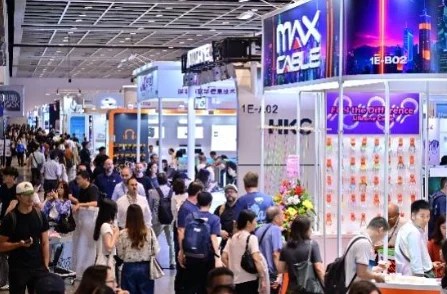
The fairs will be held at the Hong Kong Convention and Exhibition Centre (HKCEC), showcasing the latest consumer electronics, smart products, electronic components and innovative technology solutions. Last year, the fairs brought more than 3,200 exhibitors from 20 countries and regions and attracted nearly 60,000 industry buyers from 142 countries and regions, who visited to source the latest products and explore new business opportunities.

EFAE eAsia 2026

Entering its 46th edition, the Electronics Fair continues to serve as a premier global platform connecting the international electronics industry, showcasing groundbreaking products and innovative solutions that align with latest tech trends. 

This year’s fair will spotlight three key themes: 

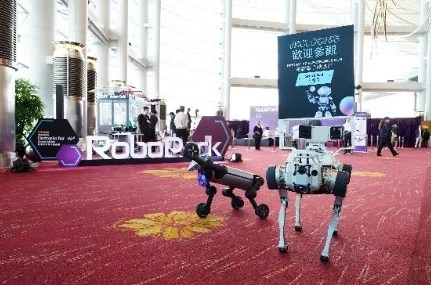
  • AI and Robotics:  Bring together the latest advancements and applications in AI, robotics and intelligent automation, showcasing how emerging technologies are driving industrial transformation and reshaping the future of work and everyday life. The fair will also feature the dedicated “RoboPark” zone, where diverse application scenarios and live demonstrations highlight how robotics are being incorporated into industrial manufacturing, commercial services and daily life, unlocking limitless possibilities for a smarter future.
  • Smart Wellness: Showcasing a wide range of digital health devices, smart wearables, personal care technologies, elderly-care solutions and wellness -focused electronic products, this theme reflects the growing demand for technology-enabled health management and enhanced quality of life.
  • NEXTEntertainment: Focusing on the future of the digital entertainment, the fair showcases immersive, interactive and intelligent entertainment experiences.  Featuring XR technologies, smart gaming devices, digital content creation tools, entertainment solutions and innovative consumer electronics to enhance entertainment experiences and empower digital content creation.

EFAE eAsia 2026

Various zones will be set up to facilitate buyers in sourcing products. The highlighted zones include: 

  • Hall of Fame: A collection of electronic products from renowned global brands. The fair will continue to feature the “RISE Avenue”, highlighting emerging brands and innovative products.
  • Future Industries Zone (NEW): Organised by the HKTDC and the Hong Kong Electronic Industries Association, and supported by the Innovation, Technology and Industry Bureau (ITIB) of the Hong Kong SAR Government, the Future Industries Zone showcases innovations across five key areas including Future Computing & Microelectronics, Future Materials, Future Wellness, Future Supply Chain and Future Energy & Ocean Economy, this new zone highlights the latest technological advancements shaping the future of industries and smart cities.
  • Startup Zone: Showcasing promising startups and emerging ideas. A curated series of start-up events will be held to foster connection, collaboration, and growth.
  • GoGlobal Connect Zone (NEW): Bringing together professional service providers, to offer on-site one-stop support for businesses seeking to expand internationally, helping them explore overseas markets, drive business growth and accelerate global development.

    EFAE eAsia 2026

electronicAsia, held concurrently with the Hong Kong Electronics Fair (Autumn Edition),  focuses on various electronic components, parts, and related solutions. 

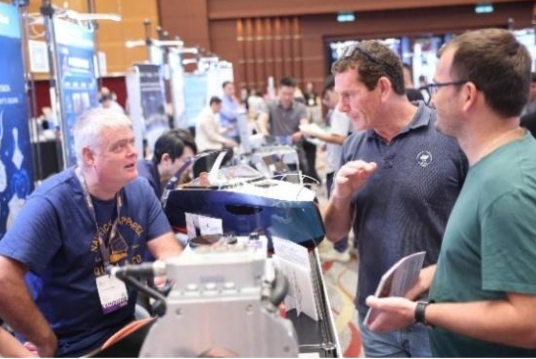
During the fairs, a series of forums, conferences and seminar sessions will be organized, where industry  experts will share insights on latest market trends and technological developments while providing valuable networking opportunities for industry professionals.  In addition, startups will be able to showcase their innovative ideas through this platform, connect with potential investors and gain advice from experts to support their business growth and development. 

Register Now for Free Admission: https://tinyurl.com/2rzyunh5 

Fair websites: 

Hong Kong Electronics Fair (Autumn Edition): https://www.hktdc.com/event/hkelectronicsfairae/en

electronicAsia: https://www.hktdc.com/event/electronicasia/en

______

Want updates like this delivered directly? Join our WhatsApp channel and stay in the loop.

This article was Sponsored by Hong Kong Trade Development Council

We can share your story at e27 too! Engage the Southeast Asian tech ecosystem by bringing your story to the world.
 You can reach out to us here to get started.

The post Hong Kong Electronics Fairs (Autumn Edition) and electronicAsia: Cutting-Edge Technologies on Display This October, Shaping the Future of Industries appeared first on e27.

Posted on Leave a comment

The unsexy side of SEA traveltech: eSIMs, visas and hourly hotels win big

Southeast Asia’s travel industry has roared back from the COVID-19 pandemic, and a new generation of founders is betting that the region’s next big travel wins won’t come from another flight-and-hotel search engine, but from the unglamorous plumbing around it: visas, eSIMs, hourly hotel bookings, corporate travel expense trails, and the local guides who make a trip memorable.

Between 2018 and 2024, dozens of traveltech startups quietly emerged across Jakarta, Ho Chi Minh City, Manila, Bangkok, Kuala Lumpur and Singapore, chasing everything from capsule hotels and glamping cabins to AI-enabled visa infrastructure and self-guided city quests.

Also Read: The impact of eSIM on international roaming and travel

Some, like Indonesia’s Bobobox, have scaled into multi-country hospitality brands backed by the likes of Li Ka-shing’s Horizon Ventures. Others remain scrappy, single-city bets still hunting for their first cheque. Together, they map a region-wide reimagining of how people move, sleep, pay and explore.

Below, we round up 23 of these emerging Southeast Asian traveltech companies — their founders, funding, and the problem each is trying to solve — as a working reference for anyone tracking where the region’s travel economy goes next.

Company Country  Founded in Founder(s) Description
Bobobox Indonesia 2018 Indra Gunawan, Antonius Bong Bandung-born hospitality-tech startup building IoT-enabled capsule hotels (Bobopod) and glamping cabins (Bobocabin) for budget-conscious and solo travellers across Indonesia.


Company Country  Founded in Founder(s) Description
Go2Joy Vietnam 2018 Simon (SungMin) Byun, Yongsun Jang, Vesper Pham Ho Chi Minh City-based app-based platform for booking hotel rooms by the hour, overnight or day, with the largest inventory of 1-2 star hotels in Vietnam.


Company Country  Founded in Founder(s) Description
Travelio Indonesia 2018 Zulfaa Irbah Zain ( verify founder) Jakarta-based rental platform and end-to-end property management firm managing thousands of apartments for short and long-stay travellers across Indonesia.


Company Country  Founded in Founder(s) Description
Passpod Indonesia 2018 Digital tourist pass and connectivity provider offering travellers seamless data access and curated local attraction deals across Indonesia and beyond.


Company Country  Founded in Founder(s) Description
SPUN Global Indonesia 2024 Christa Sabathaly, Dilla Anindita Jakarta-based AI-enabled visa infrastructure startup automating and simplifying fragmented visa processes for travellers across Southeast Asia.


Company Country  Founded in Founder(s) Description
TUBUDD Vietnam 2021 Huyen Minh Do Ho Chi Minh City-based concierge platform matching international visitors with vetted local ‘buddies’ for authentic, guided experiences.


Company Country  Founded in Founder(s) Description
VLeisure Vietnam 2018 Phan Le B2B global travel network out of Vietnam distributing hotels, transfers, tickets and excursions to travel partners.


Company Country  Founded in Founder(s) Description
CREX Singapore 2022 Sam Hon AI-driven visibility and sustainability analytics platform helping hotels benchmark and improve their digital presence and ESG credentials.


Company Country  Founded in Founder(s) Description
Truely Singapore 2022 Simon Landsheer eSIM connectivity startup offering a single ‘Switchless’ SIM that automatically connects travellers to the best local network and rates in every country.


Company Country  Founded in Founder(s) Description
Flow App Singapore 2021 Hourly hotel booking platform letting urban travellers pay only for the hours of stay they actually need.


Company Country  Founded in Founder(s) Description
Questo Singapore 2020 Mulyadi Syariffudin, Yock Song Law Creator-enabled platform for self-guided city quests, letting travellers discover destinations through gamified trails.


Company Country  Founded in Founder(s) Description
DailyPass.com Singapore 2018 Christophe Secher Daycation marketplace letting locals book hotel day-experiences without an overnight stay, unlocking incremental revenue for hotels.


Company Country  Founded in Founder(s) Description
Cocotel Philippines 2021 Rafael Jouwena Budget beach-hotel chain and booking platform delivering affordable, quality-value stays across Philippine island destinations


Company Country  Founded in Founder(s) Description
Travelstop Singapore 2018 Prashant Vishwas Kirtane Corporate travel and expense management SaaS platform streamlining business trip booking and reconciliation for companies.


Company Country  Founded in Founder(s) Description
Vouch Singapore 2021 Joseph Ling, Yap Mingyang Interface and CRM tooling startup helping hotels and hospitality businesses simplify guest-facing digital operations.


Company Country  Founded in Founder(s) Description
ASCENT Singapore 2018 Darren Tng Helicopter ride-sharing platform backed by venture builder REAPRA, letting flyers skip road traffic across Singapore.


Company Country  Founded in Founder(s) Description
Deemples Malaysia 2019 David Wong Platform matching golfers travelling for leisure with playing partners, filling tee-times that would otherwise go unused.


Company Country  Founded in Founder(s) Description
Tourkrub Thailand 2018 Thai marketplace helping travellers compare and understand tour packages from a fragmented field of travel agencies.


Company Country  Founded in Founder(s) Description
Experience Philippines Philippines 2019 Giancarlo Gallegos Global platform of curated experiences turning everyday outings into shareable travel adventure stories for visitors to the Philippines.


Company Country  Founded in Founder(s) Description
Sakay.ph Philippines 2019 Philip Cheang Manila-based website and app providing real-time commuting and transit directions for travellers and daily commuters navigating Metro Manila.

Company Country  Founded in Founder(s) Description
Trip.Club Philippines 2018 Menchie Dizon Manila-based business travel platform managing corporate trip bookings so companies don’t have to handle unmanaged travel themselves.


Company Country  Founded in Founder(s) Description
Big Tiny Singapore 2018 Adrian Chia Tiny-house hospitality startup hosting travellers in eco-conscious tiny homes across rural Southeast Asian getaway destinations.


Company Country  Founded in Founder(s) Description
Drivemate Thailand 2018 Bangkok-based peer-to-peer car-sharing marketplace — often dubbed the ‘Airbnb for cars’ — letting travellers rent vehicles directly from owners.

The post The unsexy side of SEA traveltech: eSIMs, visas and hourly hotels win big appeared first on e27.