Posted on

In good times and bad: An outstanding investor will stand by you

Last October, I shared my key takeaways and observations from my first year in venture capitalism at an early-stage VC fund, Vertex Ventures Southeast Asia and India (VVSEAI).

In my first year, I guess, like many other analysts and associates, I aimed to perfect the hard skills, crunching numbers, modelling different scenarios, learning to challenge assumptions, and asking the right questions.

What does it take to be an outstanding investor?

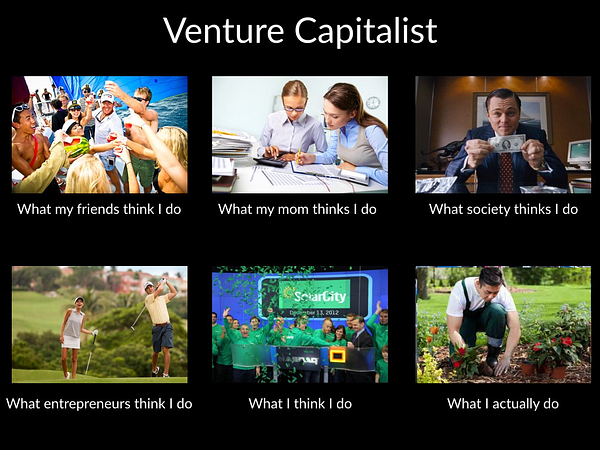
This year, I’m close to my second year at VVSEAI, and I often thought,  what does it take to be an outstanding investor? I showed this meme in my previous articles as it resonated with me.

A VC role is perceived so differently by different people. Many think that being a VC is all about finding the right startup to invest into, riding its growth, and making huge returns for the limited partners, and that’s it.

And, so often, I hear that the main strategy is to invest in many so that hopefully, one or more of them lead to a goldmine. At VVSEAI, I soon learned that this couldn’t be farther from the truth from observing my partners. It is more than just about picking the right horses. It is also about backing them till they succeed.
My partners kept reminding me that the hard work starts after we invest. I thought I knew what that entails. Until recently, a portfolio founder, Prajit Nanu, shared his journey and various stories with all our team members at a recent company offsite.

Also Read: Nium adds US$200M more to its war chest to become Southeast Asia’s latest unicorn

Nanu is the CEO and co-founder of Nium, a recently-minted unicorn in the fintech space. Their vision is to build a modern payments platform that helps global businesses move money anywhere in the world, in real-time. For the uninitiated, Nanu is part of VVSEAI’s family.

We first invested in Nium’s Series A round back in 2016 (back then called Instarem) and have worked closely together.

Having built his startup into one of the top 250 fintech companies globally, Nanu has crossed paths with countless investors in the past six years.

It would be refreshing and extremely valuable to share his keen observations on what separates an outstanding investor from the rest. After all, Nanu has had extensive experience working with various types of investors.

The following are some of my reflections from his insightful sharing.

Sharing the same vision and conviction

“Not all capital is equal” is a familiar maxim in the venture capital space, and yet, not everyone fully comprehends what it means.

“I have seen many first-time founders who made mistakes by being swayed by investors who gave them the highest valuation, without considering the entire ‘package’ offered by the other investors,” Nanu shared. “Most importantly, does the investor share the same vision as you do?”

Nanu shared that although Nium is now a unicorn, their startup journey had been an arduous and turbulent one. They had iterated their model not once, not twice, but five times to become what we know them as today.

Little known to others, Nium’s business was at the cusp of shutting down no less than three times in its early years. He appreciated that VVSEAI shared the same vision and demonstrated the same conviction as he, right from the beginning.

During the challenging moments, when Nium was in “survival mode,” Nanu shared that his portfolio manager, Genping Liu, constantly reached out to him for ideas on gathering enough funds to survive the immediate year and steer the business forward together.

The rest of the VVSEAI team also called on their vast investor network to convince other investors to back Nium at a time when few wanted to, as Nium’s fate was uncertain. He felt that this was rare among the investors he had met, as he had heard of many stories where the investors pulled the plug when the going got tough.

Hearing this made me realise that an outstanding investor buys into the same vision as the founders and is ready to back them for the long term beyond having the ‘hard skills’. It’s easy to draw up an immaculate plan to recommend a startup for investment at the investment committee (IC) and then write a cheque.

But without the same conviction, it would be hard for the investor to defend the startup when things go south and justify additional funding to tide them over. Hearing how much time Genping spent with Nanu, I finally understand why he said that as a VC, ‘the hard work begins after the investment is made.

Being there in both good and bad times

“Beyond providing capital, does the investor add value in other ways? Would they open doors to potential customers and partners? Are they able to introduce new investors for the next round? Would they help attract C-suite and tech talent?

“Are the founders able to be vulnerable and honest with their investors so that he or they can support them?” Nanu thought these are important questions that someone fundraising should be asking.

Reflecting on what he shared, it became clear to me that the hallmark of an outstanding investor is ‘a fit’ with the founders, who can offer both tangible and intangible value in a complementary way to the founders through the ups and downs of the business.

Also Read: Mergers and acquisitions: Key to building an embedded finance ecosystem

At VVSEAI, it is sometimes astonishing how much time I see my partners spend with their portfolio founders, supporting their company’s growth. It is uncommon to see them having calls with each other as frequently as weekly and constantly helping to make introductions to the next potential customer, partner or investor or searching for candidates to fill the management positions.

Beyond the ‘tangible support,’ a particular quote from Nanu stuck with me. It underlined a simple fact that can sometimes be overlooked,  founders, though often very optimistic, are humans. They require emotional support and encouragement.

Nanu noted that in growing a startup, “Lots of rejections will happen, and a founder needs support, especially when the chips are down.” In investments, one often talks about the “sleep at night consideration,” arising from the margin of safety. To founders, the greatest margin of safety allowing for a good night’s sleep is knowing that your investors will be there during rainy days and thunderstorms.

In fact, Nanu mentioned that one of the most comforting aspects of Nium’s journey with VVSEAI was how the VVSEAI management is always just a Whatsapp message or call away — an open line he could tap on to confide in or seek advice without worry.

“In fact, I was consulting Genping so often, on topics as minor as selecting the ideal office location, so much so that I felt he was almost like another co-founder in Nium,” Nanu mused.

I recall an award-winning documentary Undefeated, American football coach Bill Courtney famously said that “The measure of a man’s character is not determined by how he handles his wins, but how he handles his failures.”

A similar parallel can be drawn for venture capitalists (VC), in which the true measure of a VC is not determined by how they celebrate the wins but by how they treat their founders amidst setbacks.

“The ‘outstanding’ investors are not only there to celebrate the wins, but can also always be relied on to sit by the founders’ side through uglier times.”

I’m proud that most of us at VVSEAI are someone whom a founder can turn to in both the good and bad times. When we mention that our founders are part of the “Vertex Family”, it is not something we say in passing, our founders hold an important place in our hearts.

Not afraid to offer stern, but fair criticism

“Iron sharpens iron. Man sharpens man.”

No one (myself included) likes receiving criticism or negative feedback. Whether it is due to pure ego or a firm conviction in your idea, a common knee-jerk reaction is to think that the critic is in the wrong.

Nanu shares, “At an early stage, you want your investor(s) to challenge you, but not block the path. Be supportive of the founders when they are pivoting … disagree if it’s a crazy idea, but do not mock their ambitions.”

He reflected on a period of tension in 2020, whereby Nium and VVSEAI engaged in a back and forth conversation regarding Nium’s intentions of applying for a digital banking licence in Singapore. Nanu notes that the constructive disagreement was a watershed moment that actually paved the way for Nium’s success today.

Also Read: What investors should know about security, hacking and cryptocurrencies

It was a tough call for him, but he eventually heeded VVSEAI’s recommendation to forgo the licence in favour of a greater focus on its global B2B payment business. In retrospect, he said it was “…probably the best decision [he] made that year.”

Nanu emphasised that some friction between investor and founder is actually beneficial, provided that criticisms are made with the same end goal of fulfilling the founder’s vision in mind.

Nanu’s nuanced recount made me realise that founders would grow to appreciate investors who are not afraid to initiate tough conversations from the heart.

In fact, by poking holes in the founder’s assumptions, investors (who tend to have amassed a great wealth of knowledge within their industry of expertise) who are not merely “yes-men”, go a long way in shaping business strategies for the better, especially for fresh-faced founders lacking an in-depth understanding of their market.

Obviously, bombarding a founder with overly harsh or non-constructive criticism can do more harm than good. I can only imagine such treatment completely wounding or demoralising a founder to a point where his/ her drive to fulfil the vision is eradicated. Being able to walk the fine line between challenging founders’ ideas and yet, not disregarding or disrespecting their grand ambitions is the hallmark of an outstanding investor.

Mulling over the three key takeaways from Nanu’s sharing, I had a eureka moment in which the seemingly disparate themes clicked all at once; for a founder, all the qualities that make a great investor are simply the ones that make a great friend.

To me, a great friend is someone who:

  • Shares similar beliefs and convictions and sees the value of all that you have to offer
  • It supports you in a complementary way to help your business grow more quickly
  • It is reliable and trustworthy and can be counted on, be it rain or shine
  • Does not mock your crazy ambitions but challenges your assumptions to get you one step closer to your dreams. The saying goes, “A true partner sees us more clearly than ourselves and is willing to say things most people won’t.”

We are grateful to Nanu for openly sharing his thoughts and perspectives on how a great investor should operate.

At Vertex Ventures Southeast Asia and India, we constantly strive to be the best partner to our founders. This all begins with having honest conversations with our founders so that we can have the best understanding of their needs and go on to position their companies most beneficially.

This article first appeared on Vertex Ventures.

Editor’s note: e27 aims to foster thought leadership by publishing views from the community. Share your opinion by submitting an article, video, podcast, or infographic

Join our e27 Telegram groupFB community, or like the e27 Facebook page

Image credit: Canva Pro

The post In good times and bad: An outstanding investor will stand by you appeared first on e27.

Posted on

Ecosystem Roundup: Zenius lets go of 200+ employees, Bibit bags US$80M+ funding, ADDX nets US$58M

Indonesia’s Zenius lays off 200+ employees
This amounts to over 20% of its 900+ workforce; As per sources, the 600-strong content team, which includes tutors and illustrators, was particularly affected; This comes amidst the global economic downturn.

These 21 Web3 startups prove why Vietnam is world’s most surprising crypto hotspot
Vietnam has given birth to several leading metaverse games startups, including Axie Infinity, which is a rage among GenZ.

Robo-advisory startup Bibit raises US$80M+ funding
Investors include GIC and Prosus Ventures; Bibit says it has enabled millions of investors across the archipelago to build investment portfolios based on their risk profiles and goals; It specifically targets mostly millennials and first-time investors.

Singapore private exchange ADDX bags US$58M pre-Series B
Investors include UOB, Stock Exchange of Thailand, and Krungsri Finnovate; ADDX uses blockchain and smart-contract technology to break down private market options like PE and hedge funds, thus reducing minimum investment sizes from US$1M to US$10K.

Oyo eyeing IPO after September, may slash valuation to at least US$7B
The firm chose to delay its IPO until its financial performance improves and to dodge market volatility; Its initial listing plan included a fresh issue of equity shares amounting to US$902K primary issue and a US$184K offer for sale.

SG Pharmacy platform SwipeRx bags US$27M
Investors are MDI Ventures, Bill and Melinda Gates Foundation, Johnson & Johnson Impact Ventures, and SIG; The company provides digital tools to pharmacies to better assist in managing their locations and patients.

1982 Ventures closes debut US$20M seed-stage fintech fund
1982 Ventures, which has backed 25 startups so far, expects to make 10-15 new investments and follow-on investments in its existing portfolio; It has over US$5M in early commitments to its soon-to-be-announced Fund II.

Breaking the bro code: How women are taking over the Web3 world in Asia
The Women In Blockchain Asia aims to tackle the diversity problem in the geeky and technical Web3 industry; It has a specific focus on blockchain development, curation of Web3 solutions, and expanding the understanding of DLT.

Novelship, a marketplace for limited-edition sneakers, raises ~US$10M Series A
Investors are GSR Ventures, East Ventures, K3 Ventures and iGlobe Partners; It plans to expand in Singapore, Malaysia, Indonesia, Australia, New Zealand and Taiwan; It also aims to continue to explore metaverse integration.

Hong Kong climatetech startup Allinfra secures US$6M from Nomura-led round
Allinfra allows users to store, use, or monetise their climate-relevant information on a blockchain-based network; It has two main solutions: data management software Allinfra Climate and asset tokenisation platform Allinfra Digital.

Digital wallet Pebble raises US$6.2M funding
Investors include Y Combinator, East Ventures, and LightShed Ventures; Pebble’s e-wallet offers its users a 5% annual percentage yield on their money by converting deposits to stablecoin USDC before lending them to regulated financial institutions.

Singapore AI startup Polymerize secures US$4.2M Series A
Investors are Elevation Capital and InfoEdge Ventures; Polymerize is a SaaS platform for R&D teams in chemical companies; It aims to shorten development time by up to 50% and achieve R&D cost savings of up to 40%.

Indonesia-based career platform KitaLulus raises Series A
Investors include Tiger Global, Goodwater Capital, Rocketship.vc, and Go-Ventures; KitaLulus lets users look for jobs, take screening tests, and contact potential employers directly via WhatsApp.

True Global Ventures invests US$3M in document management startup Dedoco
Dedoco is looking to enter new markets, including the US, this year; Dedoco allows users to manage their documents on-premise, which means increased data privacy and document security.

Meet the 11 startups that have received grants from SG’s Maritime and Port Authority
The startups are collaborating with maritime corporate partners from PIER71 on pilot projects that focus on the use of smart sensors, vision and data analytics, artificial intelligence and wearables.

Two senior Grab executives quit as company rejigs unit to stem losses
Chris Yeo, who heads the payments and rewards business and has been with the company for nearly six years, is leaving along with Jeffrey Goh, who leads the payments gateway business; Both worked at the Grab Financial Group’s GrabFin unit.

Indonesia’s LinkAja ‘reorganising resources’ amid layoff rumours
LinkAja is an e-wallet service from Telkomsel and state-run organisations; It says that it has 68M active users and is operating in 680 traditional markets in Indonesia as of last year.

DeFi real estate platform CitaDAO to tokenise SG property after US$600k raise
CitaDAO itself aims to solve the limited access and liquidity problems in the existing real estate ecosystem. With the Real Estate On-Chain, participants can earn income generated from real-world property leases through cryptocurrency.

Funding Societies launches Shariah-compliant financing products
The zero-collateral financing is available for Malaysian MSMEs that have been operating for at least a year; Funding Societies offers a credit line of up to US$228,000.

Indonesia’s regional digital gap narrows: East Ventures report
Internet users in the archipelago have been supporting the digital economy’s growth by using online services for news, shopping, socializing, and banking, the report found; The median competitiveness score across regions reached 43.5, higher than 42.2 in 2021.

Terra employee faces probe over embezzlement allegations
The police have also asked local cryptocurrency trading platforms Upbit and Bithumb to freeze the Luna Foundation Guard to stop it from withdrawing corporate funds from accounts held at virtual currency exchanges.

Copyright: ilixe48

The post Ecosystem Roundup: Zenius lets go of 200+ employees, Bibit bags US$80M+ funding, ADDX nets US$58M appeared first on e27.

Posted on

What Netflix really missed? Not earnings

Netflix missed earnings recently, but in my opinion, they missed something bigger. They missed building a moat.

Whenever you stumble upon a castle, you have to start building a moat around it.

Netflix’s castle was its early entrance to streaming. They recognised it, did interesting deals with media companies to get more content (pay for Friends, The Office, Seinfeld etc,) and get users to adopt the new way.

But as the adoption of streaming grew, it was also clear the technology behind streaming is easier to replicate. Thanks to Azure, AWS & GCP. Even Netflix is built on AWS. A combination of cloud technology adoption increased internet speeds, and companies like Roku & Hulu’s success were clear signals.

At this point in time, there were a couple of years when Netflix adopted its strategy is going to be about spending the highest to create original content. That was a good strategy and also a reflection of the fact that Netflix is now mainly a media company and not a tech company.

Even during these last five years when they essentially were spending gigantic sums on content, I never understood why they didn’t do other things.

Some of these other things include:

  • Buying an old movie studio (like MGM by Amazon), my understanding was, yes you could spend US$20 billion to create original content, but you can save time to get a good catalogue for cheap by leveraging Netflix’s equity. And their equity was soaring. It’s just good capital allocation.
  • Get into audio streaming.
  • Get into merch (they did recently).
  • Experiment with audio streaming products, and user-generated content products like YouTube. These might sound ridiculous but hear me out. When Google stumbled upon success with search they protected it with Maps, YouTube, Chrome and more. Most of their experiments failed but some succeeded and that’s what matters.

They do seem to do new things like gaming, which I think could be potentially huge for them. Especially when you consider their DNA in creating new code. But doing this on a high ride is usually easier and tougher when your equity gets crushed and your employees start leaving.

Also Read: How I used a platform strategy to help family entertainment centres survive a post-COVID-19 world

But again Netflix has been in such a situation before and came. In fact, their current situation is not nearly as bad as they had seen before. They still have the most important streaming product with great revenue.

But some things should change

  • Netflix should not spend so much on new content, they should acquire large and cheap catalogues. It’s tough now that everyone has a streaming service. But worth a try. More money doesn’t mean more creativity. Look at HBO Max. Find great content curators, and take interesting bets.
  • They should explore more experimental products/apps.
  • Consider acquisitions to compete against YouTube, Spotify and AMC.
  • Consider theatrical releases via own theatres (yes acquire them if possible) or just using the status quo. Hit series on Netflix could also premiere in theatres, honestly will avoid future churn.

There are many interesting ideas, but the bottom line is that “when you stumble upon a castle, build a moat around it”.

Finally, I will leave you with this picture of how Disney built a moat around its castle.

This post first appeared on the author’s blog.

Editor’s note: e27 aims to foster thought leadership by publishing views from the community. Share your opinion by submitting an article, video, podcast, or infographic

Join our e27 Telegram groupFB community, or like the e27 Facebook page

Image credit: Canva Pro

The post What Netflix really missed? Not earnings appeared first on e27.

Posted on

Dedoco raises US$3M from True Global Ventures to support global expansion plan

Dedoco founders Dr Ernie Teo (left) and Daphne Ng

Singapore-based Dedoco today announced that it has raised a US$3 million in funding from True Global Ventures 4 Plus (TGV4 Plus), bringing its total capital raised to US$7.5 million.

This update followed a seed funding round led by Vertex Ventures SEA & India (VVSEAI) who later invested a US$2 million follow-on funding in the company.

In a press statement, Dedoco said that the funding will be used to support its global expansion plan. Having set a presence in Australia, Singapore, Malaysia, and Thailand, the company is aiming to enter the US market this year.

Founded in 2020 by Daphne Ng and Dr Ernie Teo, Dedoco described itself as a DMaaS (Document Management as-a-Service) platform that is built on blockchain technology.

Also Read: Why is it time for climate and impact startups to consider blockchain?

It aims to tackle the challenges of lowering fraud risks, unauthorised signatures, and non-compliance. According to the company, the current solutions typically rely on centralised trust and take custody of digital documents, creating security concerns for organisations dealing with highly sensitive and confidential information.

Meanwhile, Dedoco’s decentralised approach allows users to continue managing their documents “on-premise”, thus supporting organisations in adhering to document security, data residency and sovereignty obligations, especially those in highly-regulated industries.

Its clients included organisations such as ERA Realty Network, GovTech Singapore, and Nexia TS.

TGV is an early investor of prominent projects such as blockchain unicorns Animoca Brands and The Sandbox, as well as the recently listed marketplace trading platform Forge Global in the US.

The fund is dedicated to blockchain companies, primarily in late-stage Series B and C across four verticals: Entertainment, infrastructure, financial services, data analytics, and Artificial Intelligence (AI).

Fundraising or preparing your startup for fundraising? Build your investor network, search from 400+ SEA investors on e27, and get connected or get insights regarding fundraising. Try e27 Pro for free today.

Image Credit: Dedoco

The post Dedoco raises US$3M from True Global Ventures to support global expansion plan appeared first on e27.

Posted on

Pipefy CEO on why founders should prepare for international expansion since Day One

In this episode, we are excited to welcome Alessio Alionco, Founder and CEO of Pipefy, a work management platform that allows companies to streamline and automate business processes. Prior to that, Alionco was the Founder & CEO of Acessozero, a local commerce marketplace, and CEO of JR Consultoria.

In our conversation, Alionco talks about: the importance of thinking global from the beginning instead of just on the initial market, the importance of prioritizing people first and building a diverse team with unique perspectives, the role of agility when localising a business and much more.

This episode is sponsored by our partner ZEDRA. Learn more about how the ZEDRA team can support you in expanding to new markets here.

Find our entire podcast episode library here and learn more about our forthcoming book on global business growth here.

Also Read: Yoco head of international expansion on building trust in a new market

Interested in learning more about our book Global Class? Be the first to get a copy (coming out August 23, 2022), and get a ton of valuable free bonuses for pre-ordering. Learn more here.

The article was first published by Global Class.

Image Credit: Global Class

The post Pipefy CEO on why founders should prepare for international expansion since Day One appeared first on e27.

Posted on

NGC Ventures closes US$100M fund to invest in Web3 projects

Singapore-based crypto-focused VC fund NGC Ventures has closed its third blockchain fund with committed capital of US$100 million.

NGC Metaverse Ventures’s backers include notable industry investors, such as Babel Finance, Altonomy, Huobi Ventures, Nexo Ventures and GBIC.

The fund will back early-stage Web3 projects extending from the metaverse and its infrastructure to DeFi, GameFi and NFTs.

NGC Metaverse Venture has made early investments in Everyrealm, VR Jam, and EthSign.

Also Read: NGC Ventures launches US$20M fund, invests in decentralised exchange Dexlab

Roger Lim, NGC Venture’s General Partner, said: “Despite the systematic market slowdown globally, we continue to see the emergence of high-potential projects that are set to shape the next era of Web3. Our role is to identify such projects and work extensively with these talented teams to ensure they have all the necessary capabilities to turn their ideas into reality. The Metaverse Ventures Fund allows us to be at the heart of it all as we collaborate with the brightest minds to create a thriving digital realm with endless possibilities.”

The funding comes after the success of NGC Ventures’s previous funds, which made early strategic investments in projects such as Solana, Oasis, NYM, Babel Finance, Republic, Banxa and Algorand.

NGC will offer these projects access to various resources, including tokenomics advisory, influencer profiles, social platforms, launchpads, legal firms, market makers, exchanges, and ecosystems. It will also connect founders to NGC’s global investor network, built around its presence in Singapore, San Francisco, New York, London and Shanghai.

With a global team spanning Asia, the Americas, and Europe, NGC works closely with founders to solve their problems with tokenomics, go-to-market strategies, and distribution channels.

In May 2021, NGC Ventures, in partnership with Solana Foundation (a web-scale blockchain), announced the launch of a US$20 million strategic investment fund.

Fundraising or preparing your startup for fundraising? Build your investor network, search from 400+ SEA investors on e27, and get connected or get insights regarding fundraising. Try e27 Pro for free today.

Copyright: solanofg

The post NGC Ventures closes US$100M fund to invest in Web3 projects appeared first on e27.

Posted on

Raised a funding round? Now you can submit your press release to e27 in 3 simple steps

At e27, our mission is to provide entrepreneurs with the tools and resources to build and grow their companies. And that includes publishing relevant news from the Southeast Asian startup ecosystem.

If you are a regular reader of our site, you might be familiar with the different types of content that we publish. In addition to publishing thought leadership pieces from our contributor community, our in-house writers also feature articles on trends, issues, and profiles of notable startups and investors in the region.

But funding news remains a fan favourite amongst our readers. Our editors score these stories from various sources, but sending press releases to our inbox remains the most popular way to get words out on this major milestone. Sadly, due to the number of incoming submissions, and the limitation of our lean content team, we often have to be extra selective in choosing the press releases to publish. We are aware that this process can be hurtful for startups and the PR agencies that represent them.

So we decided to transform the way we are publishing funding news by walking the (tech) talk and tapping into the power of digitalisation.

Presenting an easy-to-use online tool that allows anyone to submit their fundraising news releases in just a few steps. No more multiple emails to e27 journalists, chasing up for publishing schedules and confirmations, and all that exhausting rollercoaster ride.

In just three steps, you will be able to send us all and any information related to fundraising, investments, financing, etc. for your clients or startups.

How it works

To access the tool, you need to create a profile for yourself and login into the e27 site. Once you log in and put your cursor on your profile picture, you can see ‘Submit Funding News’ just above ‘log out’ at the end of the list (see the screenshot).

When you click on this, a page opens up (see the screenshot below), which greets you with the question ‘Does the company have a profile page on e27?

This is where you select the company that has received the funding and the investors, who participated in the round. Feel free to add any other organisation that is of relevance or may be mentioned in the press release.

If your company already has a profile, click ‘yes’, choose it from the dropdown menu (you can choose more than one), and add the headline and the main body.

If you don’t have a profile, create one with the help of this online guide. Come back to the tool, choose the company profile from the dropdown menu and then proceed.

You can add the following details: the name of the company that has raised the capital; name(s) of the co-founders and investor(s); the amount raised (USD), funding stage/round; whether equity, venture debt or strategic investment; the company’s plans with the capital; details of the previous rounds; and a brief description about the company and its products/services.

You may also add a relevant picture using the ‘insert/edit image icon under the ‘key information’ tab. Pictures of founders, or one with investors will be best. Avoid company logos or screenshots of the website/app.

The tool also allows you to add quotes from key people (founder, investor, etc.) or any other additional information.


Lastly, click ‘submit for review’. And you will see this:

This is where your job ends and ours begins. We will review the information and fact-check it thoroughly before publishing. Once published, you will also receive a notification (via email). You can also find it on e27.co/news (please note that the publication of posts is the sole discretion of e27).

If you have any questions or technical difficulties while submitting email us at writers@e27.co

Image Credit: dirkercken

The post Raised a funding round? Now you can submit your press release to e27 in 3 simple steps appeared first on e27.

Posted on

How motherhood actually propelled me to become an entrepreneur

I left my full-time role as a lecturer to be a part-time stay at home mum during the height of the COVID-19 pandemic.

Many people thought it was a risky move, as I left a seemingly stable career in the public sector when others were on the brink of losing theirs. It was a few months after my maternity leave ended, and all I wanted to do back then was to spend more time at home with my young children.

I took the time away from the workforce to be a more involved mum at home and somehow started two e-commerce brands related to mummy and children products, Playand and A Mighty Mum, with a baby attached to me at all times.

Failures do not define me

Was I scared to start this entrepreneurship journey again? It was absolutely terrifying.

Many other business ideas were developed halfway before starting Playand and A Mighty Mum. Websites were built halfway, business decks were written that never saw the light of day, and I’m still reminded of my own startup failure many years back. Most importantly, I was afraid that I would end up with less time for my two kids again.

However, as cliché, as it sounds, I knew that if I did not start now, I would probably not start anything. I made a lot of mistakes with my own failed startup years back, and this time around, I am determined not to repeat the same mistakes with my two brands, Playand and A Mighty Mum.

Start with a problem (or problems!)

When I left my full-time role, I was not used to being solely a “stay home” mum, with a baby literally attached to me at all times. I wanted to do something still, so I set out to solve my problems as a mother whose eldest child had severe nosebleed issues, and my second one was a newborn baby who nursed round the clock.

At that time, I thought if I were to face these issues as a mummy, I am sure I won’t be the only one!

How Playand started

Playand, which is modular and multi-functional foam furniture that doubles up as imaginative play objects for children, was started because of my eldest child’s severe nosebleed issues. The nosebleed got so bad and profuse one day that I called an ambulance on her.

Also Read: Share your story: How to find founder fame in just 3 days

That was an extremely traumatic moment, as I sat there, hands and clothes drenched in my daughter’s blood. To not trigger her nosebleed episodes, we had already thrown away our curtains, all soft toys, pillows, mattresses, and movable hard furniture that she could potentially hit her nose on as a slight knock sets her bleeding.

After that incident, I began to think about furniture/toys that she can safely play with, sleep and “knock” into safely without triggering her nosebleeds. When online research did not give me any satisfying products that suit my needs, I set out to design and manufacture my own.

It was not easy to be navigating this prototyping stage amid a circuit breaker, as physical visits to the factories overseas were not permissible. I had to make many prototypes in different shapes, materials, foam thickness and density before finally settling on a reliable factory that could produce what I envisioned.

How A Mighty Mum started

Unknown to many, A Mighty Mum was conceptualised even earlier than Playand, when I began my breastfeeding journey five years ago after giving birth to my eldest child. I had a lot of issues with breastfeeding in public or pumping milk at my workplace.

The perpetually full nursing rooms (or lack thereof) and also the forgetful mum syndrome of forgetting to bring a nursing cover out made me want to design multi-functional clothing that can be used as a nursing cover, allowing mummies to breastfeed or pump anytime, anywhere.

Breastfeeding in public or pumping at the work desk would be made so much easier since an existing piece of clothing on the body can be used.

However, it was a struggle to find the right factory that understood the requirements of such a design and sourcing fabric with the right amount of stretch, thickness, and weight proved to be more difficult than I imagined.

After more than five failed attempts to get the right factories to work with me, I finally found a local factory that was willing to take a chance on me. Because of this long delay, the timeline for launch became closer to that of Playland’s, and I ended up launching two brands simultaneously within months of each other, which was not intentional. It was honestly extremely challenging trying to launch and grow two brands simultaneously.

Being comfortable with change

It’s been an eye-opening eight months so far since I started the two e-commerce brands. Of course, Playand and A Mighty Mum are still work in progress, with a lot of room for expansion and growth in terms of developing new product lines and reaching new markets regionally.

Also Read: Why we need to stop calling them “mumpreneurs”

As a designer by training, I am excited about new product development and conceptualising new and interesting business models to grow the business. A lot of people have asked me about my five-year plans for the two brands, but I think things are a lot more fluid than they are in the current climate.

Some of my plans for the two brands were accelerated by chance or opportunities that came my way unexpectedly, while others were shelved until a better time to launch. I used to be uncomfortable with having plans disrupted, but these short eight months have taught me that being opportunistic is more valuable than uncomfortable.

What’s the worse that could happen?

Despite my initial fears, I’m blessed and glad that I took the gamble to launch Playand and A Mighty Mum. If you never start, you will honestly never know. I have come to realise that the more I let go (titles, money, fame and especially fear), the more I opened up my heart to humbly learn from others.

And as my husband always says, “What’s the worse that could happen?” It’s important to start small, validate the demand, get feedback and reiterate to minimise risks.

If you think long and hard about what’s the worst that could happen after starting something, you will probably reach this conclusion: “Nothing!”.

A look into the future

We currently have some angel investors who are interested in hearing more about our plans and how they could support our growth. However, we are also open to the possibility of pitching to VC firms who have a keen interest, network or experience in growing e-commerce brands. We have always been open to interesting collaborations and partnership opportunities, some of which have helped us grow tremendously during the past eight months.

Editor’s note: e27 aims to foster thought leadership by publishing views from the community. Share your opinion by submitting an article, video, podcast, or infographic.

Join our e27 Telegram groupFB community, or like the e27 Facebook page

Image credit: Playand

The post How motherhood actually propelled me to become an entrepreneur appeared first on e27.

Posted on

How to employ a tech-augmented trading strategy

Making direct investments in financial markets is a rewarding experience; however, it is not without its challenges. During periods of heightened volatility, many investors become driven by emotion over logic, which often leads individuals to stray from their long-term strategy.

With geopolitical threats, economic uncertainty and ongoing inflationary pressures causing stress to portfolios, traders and investors must have the correct tools, knowledge and preparation to mitigate the potential risks of a volatile market environment.

During times of low volatility, it is common for investors to favour directional strategies, i.e., buy and hold blue-chip stocks or employ a ‘long risk’ approach, which aims to benefit from a trend of upward price movements, with little thought given to market corrections.

However, market corrections don’t often come with advance warning. Therefore, a clear understanding of these potential risks, and the subsequent utilisation of available tools and strategies, can help traders reduce the extremes of portfolio volatility in times of uncertainty.

Augmenting trading strategy with technology

It’s common knowledge that trading with your emotions can lead to higher-risk, reactive investment behaviour, with little regard to longer-term outcomes. Even the most seasoned trader can fall prey to their emotions in the heat of a risky trade, during a bad day, or when getting caught up in chasing a bull market.

Being aware of these pitfalls is one thing. Still, to truly protect yourself (from yourself), traders should augment their trading strategy with tech tools such as performance analytics to help protect against human error.

Leveraging this sort of technology can allow traders to assess their trading behaviours and the markets. It can offer them the ability to minimise their downside risks by employing sound money management rules, setting reminders to protect themselves from emotional trades, and tracking metrics on open trades in real-time to stay disciplined.

Also Read: The 5 pillars of digital transformation that meet business objectives efficiently

For many traders, the current period of high volatility might be their first experience of these types of markets. The faster price movements are often mirrored by faster trading, less time setting up trades and less confidence in open positions. This is often compounded by traders taking higher risks per trade by not adjusting their size to match the increased intra-day volatility.

Tools that track discipline can provide early warning signals that undisciplined trades have started to creep into a trader’s performance. A nudge that this is happening can help a trader recover more quickly and take back control of their discipline. Even the most successful traders have periods of ill-discipline – they know how to recover more quickly.

From monitoring to responding

The technology and tools available to traders can assist with monitoring one’s portfolio, but let’s take it a step further by introducing specific tools that allow traders to respond in the short term.

Available to traders now is a range of platform add-ons or tools that allow them to receive trading signals at the right time. These can be excellent tools for a wide range of potential users. For example, inexperienced traders who may struggle to find a reason to trade can use these tools to get factual, live trading signals at regular intervals (and with different maturities).

A suggested trading strategy and signal rationale accompany the trading signal, including a suggested stop level and a take profit level. The rationale underpinning this is that risk management around any trade is an essential part of learning to trade effectively.

In addition, more experienced traders who are not “time rich” may find these tools help them uncover potential trading opportunities that negate the need for them to conduct extensive research before deciding to place a trade, or indeed a reinforcement of an idea they had been looking at.

While much trading activity is centred around economic data releases and other events, these signalling tools identify and present potential trading opportunities based on the evolving price action in each market.

They are a useful source of trading ideas when the “fundamentals” environment is more subdued. Even the most experienced traders often find that trading statistically-generated signals alongside their existing self-led trading may provide them with a useful risk diversification strategy.

Also Read: PikoHANA: Helping Singapore startups scale through fractional finance

Whether investors are new or more experienced, one of the main benefits of such tools is that they leave the decision of what, when and how to trade completely with the client – while equipping them with all of the necessary information.

Despite the various economic, geopolitical, and social shocks that we’ve seen over the last 24 months, many global share indices are either at or near all-time highs. High inflation and troubles in Eastern Europe bring either the prospect of higher interest rates or higher uncertainty, neither of which are welcome conditions for a long-term share investor.

By employing a smart trading strategy, augmented by tools and performance analytics, traders can help insulate their portfolios from some of the extreme stresses of market uncertainty and rising volatility.

Editor’s note: e27 aims to foster thought leadership by publishing views from the community. Share your opinion by submitting an article, video, podcast, or infographic.

Join our e27 Telegram groupFB community, or like the e27 Facebook page

Image credit: Canva Pro

The post How to employ a tech-augmented trading strategy appeared first on e27.

Posted on

1982 Ventures closes debut US$20M seed-stage fintech fund

(L-R) 1982 Ventures Co-Founders Scott Krivokopich and Herston Elton Powers

1982 Ventures, an early-stage VC firm in Southeast Asia, has announced the final close of its debut seed fund with over US$20 million in committed capital.

As per an official statement, the fund was oversubscribed as 1982 Ventures was targeting to raise a total corpus of US$15 million. It is backed by the family office of an Indonesia conglomerate, Trihill Capital, US fintech unicorn Carta, Genting Group’s venture arm, US fund of funds First Close Partners, and rali_cap.

Also Read: 1982 Ventures hits US$12.5M initial close of Fund I, to back 30 seed-stage startups

The Singapore-based firm’s backers also include unicorn and fintech founders, and senior executives of tech and financial services companies, such as Sheel Mohnot (General Partner of Better Tomorrow Ventures).

1982 Ventures — which has backed 25 startups across Southeast Asia, Pakistan and Bangladesh — expects to make 10-15 new investments and follow-on investments in its existing portfolio.

The VC firm leads pre-seed and seed rounds with an initial investment of US$250,000 and US$500,000.

In December 2021, 1982 Ventures announced the initial close of its first seed-stage fund with US$12.5 million in committed capital. 

It has over US$5 million in early commitments to its soon-to-be-announced Fund II.

Established in early 2020, the fund focuses on seed-stage fintech startups in Southeast Asia. By the end of 2021, the company said that its portfolio firms had made nearly 3x return, with first-round investments in Brick, Infina (YC S21), Homebase (YC W21) Wagely, Go Zayaan, Lista, Bluesheets, and Monit, among others.

Also Read: These 21 Web3 startups prove why Vietnam is world’s most surprising crypto hotspot

“We are accelerating our pace of investments despite current market sentiment. Early-stage Southeast Asia fintech remains the most attractive sector for venture capital,” said Herston Elton Powers, Co-Founder and Managing Partner of 1982 Ventures.

Southeast Asia is experiencing rapid urbanisation and has some of the world’s highest technology adoption and mobile and internet penetration rates. Southeast Asian fintech startups represent more than US$10 billion in unrealised value, with 100 projected fintech exits in the coming years (Dealroom).

Fundraising or preparing your startup for fundraising? Build your investor network, search from 400+ SEA investors on e27, and get connected or get insights regarding fundraising. Try e27 Pro for free today.

The post 1982 Ventures closes debut US$20M seed-stage fintech fund appeared first on e27.