Posted on

Kopi Kenangan joins unicorn club following a US$96M Series C fundraise

Kopi Kenangan, a fast-growing new retail F&B chain in Indonesia, has become a unicorn after closing a US$96 million Series C financing round, led by US-based Tybourne Capital Management.

Existing investors, including Horizons Ventures, Kunlun, and B Capital, besides new investor Falcon Edge Capital, also participated.

Also Read: Kopi Kenangan snags US$109M in Series B funding led by Sequoia Capital

As per a press note, Kopi Kenangan will use the money to accelerate the expansion of its new brands, Cerita Roti, Chigo and Kenangan Manis, across Indonesia. The foodtech firm will also continue building its network and broadening its footprint internationally.

Kopi Kenangan was founded in 2017 by Edward Tirtanata, James Prananto, and Cynthia Chaerunnisa. The firm aims to address the gap in the market between the high-priced coffee served at international coffee chains and the instant coffee sold in Indonesia’s street stalls.

It allows customers to order coffee through an app. They can either get delivered to their doorsteps or pick it up at one of Kopi Kenangan’s outlets.

In 2020, the company expanded into the food industry by launching a bread brand called Cerita Roti. Later in 2021, it launched a “chicken on the go” brand named Chigo and soft-cookies brand Kenangan Manis.

Also Read: Flash Coffee raises US$15M to take on the likes of Kopi Kenangan in SEA

Since its launch, the company has grown to employ more than 3,000 staff in over 600 stores across 45 cities. It claims to have served 40 million cups of coffee in the last 12 months and is expected to do 5.5 million cups per month in Q1 2022.

To date, Kopi Kenangan has raised over US$240 million. Its other backers are Sequoia Capital India, Verlinvest, and Sofina.

In March this year, Kopi Kenangan’s founders launched an angel investment fund targeting early-stage Indonesian companies. Coined ‘Kenangan Fund’, its average ticket size ranges from US$10,000 to US$150,000 per investment and is sector-agnostic.

Ready to meet new startups to invest in? We have more than hundreds of startups ready to connect with potential investors on our platform. Create or claim your Investor profile today and turn on e27 Connect to receive requests and fundraising information from them.

The post Kopi Kenangan joins unicorn club following a US$96M Series C fundraise appeared first on e27.

Posted on

Top news that grabbed the headlines in SEA startup scene in 2021

The Gojek-Tokopedia merger was the biggest event of 2021

The Gojek-Tokopedia merger was the biggest event of 2021

The year 2021 has been challenging for the startup world. With the spectre of the COVID-19 pandemic still lurking, many businesses had to cease operations that affected millions of jobs worldwide.

However, amidst all this, the startup world also witnessed some positive developments — the birth of many unicorns, public listing of many tech behemoths, accelerative growth of technologies such as NFTs and metaverse, and so on. Southeast Asia has been no different.

e27 brings you a list of all the major non-funding stories that have changed the startup ecosystem in 2021.

1. Grab IPO

On December 3, Grab scripted history by launching the largest IPO by a Southeast Asian company in the US. This development was a follow-up of the agreement in April that combined the company with Altimeter Growth in a SPAC merger.

The deal was valued at nearly US$40 billion.

2. Gojek-Tokopedia marriage

On May 17, Indonesian tech giants Gojek and Tokopedia announced a merger to form GoTo Group. Although the financial details were not disclosed, the companies said in a joint statement that it marked the largest ever business combination in Indonesia and the largest between two Asia-based internet media and services companies to date.

GoTo Group will continue to focus on markets where Gojek already operates. Beyond Indonesia, this includes Singapore and Vietnam.

3. AirAsia snaps up Gojek Thailand

On July 7, airasia Digital (previously known as RedBeat Ventures), the digital arm of the Malaysia-based airline operator,  acquired the Thailand operations of Gojek. The budget airline firm expects the deal to rev up the expansion of the airasia Super App in ASEAN while enabling Gojek to increase investments in its Vietnam and Singapore operations.

In return, Gojek will receive shareholding in the airasia Super App, whose market value is said to be around US$1 billion.

4. GoTo gets US$400M from Abu Dhabi fund

On October 20, GoTo Group said it was set to receive US$400 million from a wholly-owned subsidiary of Abu Dhabi Investment Authority (ADIA) in its pre-IPO round. ADIA would be the lead investor in the round and would join a global list of prominent GoTo investors, including Alibaba Group, Astra International, Facebook, Global Digital Niaga, Google, KKR, Sequoia India, and PayPal, SoftBank Vision Fund, Telkomsel, Temasek, Tencent and Warburg Pincus.

5. Carousell to take SPAC route to list in US

On June 28, Bloomberg reported that Singapore’s leading online classifieds company Carousell was mulling public listing in the US via a merger with a special purpose acquisition company (SPAC). The transaction could value the tech company at about US$1.5 billion.

The firm is already working with an adviser on the potential deal.

6. PropertyGuru to go public

On July 23, digital property marketplace group PropertyGuru announced it would merge with Bridgetown 2 Holdings, a blank-cheque company formed by Pacific Century Group and Peter Thiel’s Thiel Capital, to go public on the NYSE. The combined entity will have an enterprise valuation of approximately US$1.35 billion and an equity value of approximately US$1.78 billion at closing.

The transaction is expected to deliver up to US$431 million of gross proceeds through the contribution of up to US$299 million of cash held in Bridgetown 2’s trust account, a concurrent US$100 million private placement (PIPE) of common stock anchored by Baillie Gifford, Naya, REA Group, Akaris Global Partners, and one of Malaysia’s largest asset managers, priced at US$10.00 per share.

7. VNG mulling public listing

On August 12, Bloomberg reported that Vietnamese internet giant VNG Corporation was considering going public in the US via a merger with a special purpose acquisition company (SPAC) at a US$2 to US$3 billion valuation. The technology giant is working with financial advisers and is holding talks with several SPACs for a potential merger, the report said quoting sources.

VNG is Vietnam’s first tech unicorn with a valuation of about US$2.2 billion. The firm has been considering a potential listing for several years. Back in 2017, Bloomberg reported that VNG had signed an MoU to list its shares on the Nasdaq, the second-largest stock exchange in the world.

8. Catcha SPAC files for a US$250M IPO

Catcha Investment, a blank cheque company formed by Malaysia’s Catcha Group, filed to raise up to US$250 million in an initial public offering on January 27. The Kuala Lumpur-based SPAC plans to raise the proposed capital by offering 25 million units at US$10. Each unit will consist of one share of common stock and one-half of a warrant, exercisable at US$11.50.

At the proposed deal size, Catcha Investment would command a market value of US$313 million.

9. Traveloka prepares to list via SPAC in the US

On February 15, a Bloomberg report said Indonesian travel giant Traveloka was planning to publicly list in the US this year through a SPAC. The Jakarta-based startup engaged JPMorgan Chase as plans to go public accelerate amid the capital influx into the stock market. Traveloka is said to be valued at close to US$6 billion.

10. AirAsia to launch ride-hailing services in Malaysia

Budget airline operator AirAsia Group founder and CEO Tony Fernandes announced in end-March that it would soon be launching ride-hailing services. Understanding the potential comparison with existing ride-hailing giants such as Grab, Fernandes affirmed that AirAsia can become successful in this sector even with the heavy competition, citing history where the company managed to raise funding quicker than any other airline company.

11. Gorilla Mobile launches blockchain-powered telecom offerings

On June 23, two-year-old Singaporean startup Gorilla Mobile rolled out a Switchback feature that enables customers to convert their unused data into redeemable non-expiring ‘Gorilla Go Tokens’. The tokens can be used to offset their bills and redeem other services like international direct dialling calls and travel roaming data. Founded in 2019, Gorilla Mobile originally started as a travel SIM card company that focused on business travellers who had plenty of unused travel roaming data.

12. Ascend Money becomes unicorn

On September 27, Ascend Money, a Bangkok-headquartered fintech firm providing payment and financial services in Southeast Asia, announced a US$150 million funding at US$1.5 billion to become Thailand’s first fintech unicorn. US-based Bow Wave Capital Management and existing shareholders — Thai conglomerate Charoen Pokphand Group and Ant Group — invested in the round.

So far, Ascend Money has made inroads into six Southeast Asian countries, including Thailand, Myanmar, Cambodia, Indonesia, the Philippines and Vietnam.

13. Carousell joins unicorn club

On September 15, Singapore’s leading classifieds company Carosell Group entered the unicorn club by bagging a US$100 million financing, led by Korean PE firm STIC Investments. Carousell plans to use the money to “redefine commerce for second-hand goods and automobiles in an increasingly digitally-savvy, affluent and sustainability-conscious region”. Quek Siu Rui, co-founder and CEO, said Carousell will deepen its investments in re-commerce across more categories and markets and will continue to seek opportunistic acquisitions in scaling up.”

14. Carro first automotive marketplace to turn unicorn

In mid-June, Singapore-based Carro raised US$360 million in a Series C funding round led by SoftBank Vision Fund 2, making it the first automotive marketplace unicorn in Southeast Asia. This news followed Carro’s US$110-million raise in debt financing last year. Carro plans to use the fresh capital to strengthen its market position and expand the retail offering across Indonesia, Thailand, Malaysia, and Singapore.

Carro is a subscription-based service that allows customers to drive a car without the hassle of owning it. It provides a range of services that offer car owners everything they need. These include an in-house financing solution, after-sales services like Singapore’s first on-demand roadside recovery platform, and a flexible car ownership experience with Singapore’s car subscription service.

15. Society Pass launches US$26M IPO on Nasdaq

On November 10, Vietnamese company Society Pass, which provides a data-driven loyalty platform, launched a US$26 million IPO on the Nasdaq stock exchange in the US. The company, which offers about 2.8 million shares of common stock for US$9 per share, trades under the ticker symbol “SOPA” on November 9. With this, Society Pass has become the first Vietnamese company to complete a traditional listing on a stock market outside of its home country.

16. Mynt makes it to the unicorn club

On November 2, Mynt, a leading digital financial solutions company in the Philippines and the owner of the mobile payments GCash, scored over US$300 million in a funding round. Global growth investor Warburg Pincus led the new round, bringing its valuation to over US$2 billion to turn it into the first fintech unicorn of the Philippines. This deal follows the announcement of over US$175 million funding from ASP Philippines early this year.

17. Kopi Kenangan joins unicorn club

Kopi Kenangan, a fast-growing new retail F&B chain in Indonesia, became the latest Indonesian company to enter the unicorn list after closing a US$96 million Series C financing round, led by Tybourne Capital, on December 27.

Founded in 2017 by Edward Tirtanata, James Prananto, and Cynthia Chaerunnisa, the firm aims to address the gap in the market between the high-priced coffee served at international coffee chains and the instant coffee sold in Indonesia’s street stalls. It allows customers to order coffee through an app. They can either get delivered to their doorsteps or pick it up at one of Kopi Kenangan’s outlets.

18. Trax bags US$640M Series E

On April 8, Trax, a Singapore-based company harnessing computer vision to provide vision and analytics tools for retailers, secured US$640 million in a Series E financing round led by SoftBank Vision Fund 2 and BlackRock. Founded in 2010, Trax’s cloud platform is accelerating the digital transformation of consumer packaged goods (CPG) companies and grocery retailers by providing granular visibility of rapidly changing store conditions.

Trax claims its proprietary computer vision solutions enable users to make timely, data-driven decisions and implement immediate corrective actions. This helps retailers accelerate growth, reduce costs, and drive awareness and purchasing intent.

19. Flash Express becomes first Thai unicorn

On June 1, Flash Group, the company behind the leading express delivery service Flash Express in Thailand, closed a combined US$150 million in its Series D+ and Series E rounds.

SCB10X, the corporate VC arm of Siam Commercial Bank, led the Series D+ round, with additional investment from Thailand’s Chanwanich Security Printing Company. Buer Capital, a Singapore-based Founder’s Fund, led the Series E round. Existing investors SCB10X, Alibaba’s eWTP Capital, PTTOR, TCP Group’s Durbell, Krungsri Finnovate also joined this round.

The latest rounds bring Flash Group’s total funding raised to more than US$400 million, taking its enterprise valuation to more than US$1 billion and becoming the first unicorn startup in Thailand.

20. Ninja Van raises US$578M Series E

On September 26, Singapore-based logistics tech firm Ninja Van announced a US$578 million Series E fundraise from existing investors Geopost/DPDgroup, B Capital Group, Monk’s Hill Ventures, and Zamrud, an entity linked to a Southeast Asian sovereign wealth fund. It followed a US$274 million in Series D funding round that the company announced in May 2020.

Founded in 2014, Ninja Van has a presence in major SEA markets such as Singapore, Malaysia, Indonesia, Thailand, Vietnam, and the Philippines.

The company said that it currently employs more than 61,000 staff and delivery personnel that support the delivery of around two million parcels a day throughout the region.

21. Xendit turns unicorn

On September 15, Xendit, a payments infrastructure company based in Indonesia, secured a US$150 million Series C funding led by Tiger Global. This deal followed a US$64.6 million Series B round led by Accel and brings its total funding raised to US$238 million since its inception in 2015.

Xendit aims to simplify the payment process for businesses — from SMEs and e-commerce startups to large enterprises — in Indonesia, the Philippines and Southeast Asia. It enables them to accept payments, disburse payroll, run marketplaces on an easy integration platform supported by 24×7 customer service.

With the Xendit tools in place, businesses can accept payments from direct debit, virtual accounts, credit and debit cards, e-wallets, retail outlets, and online instalments.

Ready to meet new startups to invest in? We have more than hundreds of startups ready to connect with potential investors on our platform. Create or claim your Investor profile today and turn on e27 Connect to receive requests and fundraising information from them.

The post Top news that grabbed the headlines in SEA startup scene in 2021 appeared first on e27.

Posted on

Expo 2020 Dubai: The Malaysian companies ready to break into the global Islamic fintech market

MDEC fintech expo dubai

According to Dinar Standard’s Global Islamic FinTech Report 2021, the Islamic fintech market is projected to grow to US$128 billion by 2025.

In 2020, the Islamic fintech transaction volume within Organisation of Islamic Cooperation (OIC) countries is estimated at US$49 billion. The halal economy is currently worth US$3.1 trillion and is projected to be worth US$5 trillion by 2030.

At the heart of this explosive growth is Malaysia, a country with 89 per cent of internet users penetration among its population. It ranks first in terms of market maturity and is among the top five Islamic fintech markets based on transaction volume. As the country seeks to be the world leader in the vertical, it needs to look at bringing its solutions to a global audience.

Malaysia Digital Economy Corporation (MDEC), the country’s lead digital economy agency, has included fintech and Islamic digital economy as one of the five focus areas for its digital investment future strategy. It has run various programmes to support the sector, including Fintech Booster, FIKRA Accelerator, i-Connect Fintech in Islamic Finance and the Royal Award for Islamic Finance (RAIF) Impact Challenge.

From January 9-15, 2022, MDEC will be leading a delegation of 20 Malaysian companies to Expo 2020 Dubai as part of the Malaysia Digital Economy week. These include companies from its thriving Islamic fintech industry.

“Islamic Finance and fintech are seen as a crucial pillar within the Twelfth Malaysia Plan (12MP) not just in driving a progressive, inclusive, and sustainable society, but towards expanding the country’s export market. Expo 2020 Dubai will serve as an important platform for these Malaysia-based Islamic fintech innovators to reach a global market in line with MDEC’s vision for Malaysia to be an Islamic fintech hub,” said Mahadhir Aziz, CEO at MDEC.

Here are the Malaysian Islamic fintech players set to break into the global stage:

microLEAP

MDEC fintech expo dubai

microLEAP is an Islamic and conventional peer-to-peer (P2P) microfinancing platform regulated by the Securities Commission of Malaysia (SC).

The platform serves as an alternative financing tool that allows issuers to obtain financing from investors without having to go through a financial institution. They are the first Malaysian P2P operator that offers both Islamic and conventional financing on the same platform.

microLEAP experienced tremendous growth in a short period of time. After going live with their Islamic P2P investments in April 2020, their funded notes grew by over 1,000 per cent in a span of four to five months. As of April 2021, the platform has successfully helped fund over MYR2 million across 71 funding notes – 97 per cent of which are Islamic.

Also read: Here’s how you can earn passive income with cryptocurrency easily and safely

The platform in 2021 raised US$3.26 million in equity and other modes of financing from Malaysian investment holding company MAA Group. It has since begun several key partnerships, including with Malaysian Technology Development Corporation (MTDC) and MoneyMatch.

microLEAP has also partnered with MDEC under the agency’s eBerkat campaign. More recently, it is collaborating with Bank Pembangunan Malaysia Berhad (BPMB) to finance MDEC’s Digital AgTech programme.

TheNoor

MDEC fintech expo dubai

Created and launched by actress and successful entrepreneur Noor Neelofa Mohd Noor, TheNoor (meaning ‘light’ in Arabic) is described as the ‘Ultimate Muslim Lifestyle App’. The app allows users to keep track of prayer times and listen to verses from the Quran. On top of features such as a Qiblah finder with real-time detection, the app also functions as an e-wallet.

Since its release in 2020, TheNoor has already garnered five million users. More features are en route, including more languages for its voice-over translations of the Quran. More recently, it partnered with Tabung Haji Travel & Services Sdn Bhd to offer shariah-compliant travel and holiday services.

The collaboration connects businesses to the global halal tourism industry, offering umrah and haj packages through the app. It will enable users to conduct everything from the early stage of registration right up to the completion of the Islamic pilgrimage.

In July 2021, TheNoor partnered with insurance provider Zurich to offer free personal accident coverage for the app’s users.

HelloGold

HelloGold was established in 2015 as the world’s first shariah-compliant mobile application that changes the way you buy, save, sell, and redeem physical gold.

Currently, with over 200,000 users, HelloGold allows users to diversify their investments into gold through a user-friendly app. The gold can be bought on the app for as low as MYR1 (US$0.24), with the transactions kept transparent through a public ledger powered by blockchain.

In 2018, HelloGold raised Series A funding from Silicon Valley’s 500 Startups for an undisclosed amount. The startup saw further growth during the COVID-19 pandemic, where they onboarded between 20,000 to 30,000 new customers between May 2020 to 2021.

HelloGold has won multiple awards including Best Islamic Wealth Management FinTech Company in the 2018 World Islamic FinTech Award.

Global Sadaqah

Global Sadaqah is an award-winning zakat and waqf management platform working together with stakeholders from religious bodies and foundations to banks, corporates, and the public to increase the “efficiency, sustainability, and impact of social finance.”

The Islamic crowdfunding platform is open to the public and corporate clients to contribute to zakat or waqf campaigns —verified and approved by their in-house Shariah team. One hundred per cent of the campaigns are from trusted and verified partners, with enhanced due diligence and KYC in place.

Also read: How electric mobility startups are tackling climate change in Asia

Global Sadaqah also provides fund matching by corporate partners for eligible campaigns and promises zero compromise safety and security standards. Donations are facilitated through 11 channels including e-wallet providers in Malaysia, Bitcoin, and digital gold.

The platform is fast gaining popularity, having grown more than double every year for the past two years. In February, Global Sadaqah raised MYR450,000 (US$106,000) on crowdfunding platform Ethis Malaysia, attracting investors from 10 countries including strategic angel investors.

WAHED Technologies

WAHED Technologies is an Islamic digital investment management company that provides Malaysians access to a shariah-compliant robo-advisory portfolio that is transparent and impartial. They are backed by leading investors and advisors bringing ethical and halal financial management to communities globally.

The platform currently serves more than 200,000 clients across more than 100 customer countries. WAHED now has 11 offices and nine regulatory licenses. The platform’s portfolios are a group of securities mainly across stocks and sukuks (Islamic bonds), which they will automatically invest in according to the client’s specific risk profile.

WAHED has won multiple awards including Best Islamic Robo-Advisory Platform at the World Islamic FinTech Awards 2020.

Global Psytech

Global Psytech Sdn Bhd is a data tech company that provides data analytic solutions in various industries. Incorporated in 2017, Global Psytech’s goal is to develop cutting-edge analytic solutions by integrating multiple scientific disciplines, including artificial intelligence (AI), machine learning, behavioural science, cognitive science, statistics, and psychometrics.

Their flagship product General Financial Insights (GFI) is an alternative credit risk assessment system that applies psychometrics, behavioural sciences, AI, and machine learning to estimate the risk of an individual in loan defaults.

GFI has been tested and validated at various lending institutions including Islamic banks, development financial institutions, and P2P lenders involving more than 20,000 borrowers in Malaysia and the APAC region since 2018. In short, GFI will prove crucial towards the development of further Islamic FinTech innovations and services.

Global Psytech has received multiple awards, including the International Business Review ASEAN 2020 Awards for Innovative Technology in the ICT Sector. It was also awarded as one of the Top 50 Tech Companies 2019 by the Top Internet Conference (InterCon) Dubai.

Createwills

Createwills is a fintech company in the business of Digital Wills that provides a fully legal solution that is the most comprehensive in the industry.

Createwills’ Islamic Will, known as Al Yusra, is their first Islamic Will integrated with a Faraid algorithm that can calculate the permutations within seconds.

Also read: How Grove HR is powering the next generation of Tech unicorns

This will allow Muslims to understand what happens to their assets after passing away and to plan their asset distributions accordingly.

Createwills’ Conventional Will, known as Sterling, can be customised to manage complicated gifts such as shares and trusts and allows for percentages in asset distributions.

They are currently building an ecosystem that includes, but not limited to Will storage, insurance, microloans, funeral services, trustee services, florists, automated obituaries and certifications for Will agents.

For more information on Expo 2020 Dubai and Malaysia Digital Economy Week, visit their website at: heartofdigitalasean.my

– –

This article is produced by the e27 team, sponsored by MDEC

We can share your story at e27, too. Engage the Southeast Asian tech ecosystem by bringing your story to the world. Visit us at e27.co/advertise to get started.

The post Expo 2020 Dubai: The Malaysian companies ready to break into the global Islamic fintech market appeared first on e27.

Posted on

Borzo acquires Indian delivery service NOW to strengthen its position in APAC

Borzo_acquire_news

Borzo, a global same-day intracity delivery service for businesses, has acquired NOW, an Indian company providing 90-minutes delivery service. 

Following the acquisition, The Netherlands-based Borzo intends to improve its presence in Asia and give more customised delivery choices to its clients. 

Meanwhile, as an independent brand, NOW will benefit from Borzo’s knowledge and activities in ten countries, including Brazil, India, Indonesia, Korea, Malaysia, Mexico, the Philippines, Russia, Turkey and Vietnam. 

“Joining forces will allow us to rapidly scale up in a market where demand for hyperlocal deliveries is in millions per day,” said Vivek Pandey, Co-Founder and CEO of NOW.

The current management will continue to run NOW, aiming to surpass 5 million deliveries by 2022.

Also read: How same-day and on-demand delivery can add value to e-commerce and retail businesses

Founded in 2012, Borzo is a global delivery service that allows intracity delivery for businesses. Its algorithms optimise multiple concurrent deliveries while considering geographical routes, package contents, couriers, and other factors to ensure same-day delivery.

Borzo recently secured US$60 million in venture financing from Mubadala Investment Company, Flashpoint, AddVenture, and VNV Global, among others.

Launched in 2015, NOW is a B2B commerce platform for micro retailers for product discovery, express delivery and credit. NOW, operating in eight cities, serves restaurant and drugstore chains, aggregators, e-commerce, and direct-to-consumer companies with upfront pricing at the time of placing and real-time delivery tracking for clients and recipients. 

With a fleet of over 1,500 riders, NOW claims to have close to 2 million orders every year for KFC, Pizza Hut, Apollo Pharmacies, Amazon, and various other businesses.

According to the “B2B Marketplace India” report, Indian B2B startups account for 43 per cent of all unicorns in India. 

Ready to meet new startups to invest in? We have more than hundreds of startups ready to connect with potential investors on our platform. Create or claim your Investor profile today and turn on e27 Connect to receive requests and fundraising information from them.

Image Credit: Borzo

The post Borzo acquires Indian delivery service NOW to strengthen its position in APAC appeared first on e27.

Posted on

Top 10 community articles of 2021 on entrepreneurship

entrepreneurship

As we slow down for the holidays and wrap this year with a bang, I wanted to leave you with enough food for thought. Kicking off the e27 community wrap up series with the Top 10 community articles for founders.

If you are a founder everything from funding to cap tables to hiring to company culture to market expansion is on your mind. And as you build your goals and plans for 2022, these tips and lessons from the e27 contributor community can come in handy.

Thank you to all our contributors for their valuable insights.

Talenox co-founder reveals the grind behind the glamour of entrepreneurship

Entrepreneurship is not easy to figure out. Most entrepreneurs will have their stories of adversity and business struggles to share. A clear goal and a well-thought-out plan to success will help you determine whether you want to build fast, sell fast or develop a long-lasting business. These are some of the few factors that will also help you determine if you need to raise substantial funding or not.

So, what is the grind like behind the glamour of entrepreneurship?

How EngageRocket co-founders built a sustainable partnership

Finding a co-founder that shares your vision is a big challenge, but making the relationship work in the long run is a bigger one. Even if you’re one of the lucky few, who have found a co-founder that shares your vision and ambitions, sustaining this partnership for 1, 5, and 20 years down the road will pose a new set of dynamics to navigate. The founder of EngageRocket shares tips on what it takes to build a sustainable partnership between co-founders.

What I learned about entrepreneurship through my journey as Coinhako co-founder

The first few years were challenging as the crypto market faced very low interest from the general public. We had to rely on tight financing and management of resources to tide us through. The 2017 bull run, on the other hand, ushered in huge changes in crypto trading and proved to be a big break for us. There are things he has learnt from his journey with Coinhako over the past seven years. I have condensed them into three main takeaways

Student by day, founder by night: Running a startup wasn’t my first intention. Solving a problem was

Being an entrepreneur has been the hallmark of his student life. It has been the most challenging but exciting, meaningful, and fulfilling journey as a student. In this article, he shares some insights about why he chose to run a startup as a student and how he exactly did it in the past two years of my time.

4 lessons for first-time founders embarking on their entrepreneurial journey

Having already gone through the journey of being a first-time founder and learned valuable lessons, serial founders are one of the most sought after groups of individuals for investors. After partnering with several fascinating serial founders at Picus Capital, this author shares lessons from founders about starting and building ventures from scratch, what keeps them motivated, what they learned throughout their careers as founders and early employees at different ventures, and what advice they have for future entrepreneurs.

3 learnings from KKday CEO and Founder on how his travel startup overcame the pandemic

On his journey to becoming a better founder, Jack An set out to write this piece, to document his learnings. Amongst the network of founders at AppWorks, he had the chance to closely observe Ming Ming Chen, the founder and CEO of KKday– a travel platform that provides local experiences and tours across Asia.

TWG Tea’s founder on how a luxury food brand can tap third-party digital marketplaces to expand business

In 2020, TWG Tea saw growth in every market we have an online presence in. Furthermore, they noticed that this new online shopping trend is remaining consistent even in instances when social distancing measures are lifted, proving that consumer behaviour has evolved. TWG Tea learns that it can continue to register significant online sales growth— as long as it stays nimble.

How can female founders become the new normal in Asia?

A Makan for Hope roundtable discussed the steps we can take today to empower female founders in the Southeast Asian region. The roundtable took a deep dive into the headwinds women faced and discussed the steps we can take today to empower female founders and encourage more to thrive in the Southeast Asia startup scene.

5 productivity tools for busy startup founders to stay focused in 2022

When founders decide to implement yet another productivity tool, they pass on the SaaS fatigue to their team members. Modern tech workers seem to chase after productivity is like the new-age stage of attaining enlightenment. However, in the midst of this chase, it’s important to remember Ray Dalio’s guidance that “you can have virtually anything you want, but you can’t have everything you want”.

In that case, what exactly is being productive? Is it even important?

What Cambodian women taught me about being a better woman entrepreneur

Despite running on the creative route, the company operated on the traditional model that many businesses were familiar with. Besides, Zhi Ying Chai also quickly observed that most of these businesses were not understanding the changing behaviours of consumers who are always well-connected online, and she wanted to help close this gap. So she took off for Cambodia with a team from Singapore to better understand the market and here’s what her Cambodian colleagues taught her.

Editor’s note: e27 aims to foster thought leadership by publishing views from the community. Share your opinion by submitting an article, video, podcast, or infographic

Join our e27 Telegram group, FB community, or like the e27 Facebook page

Image credit: peshkova

The post Top 10 community articles of 2021 on entrepreneurship appeared first on e27.

Posted on

Ecosystem Roundup: Kopi Kenangan hits unicorn status, One Championship nets US$150M, AirAsia cancels Gojek unit acquisition

TikTok ousts Google as world’s most popular domain in 2021

TikTok ousts Google as world’s most popular domain in 2021

Kopi Kenangan joins unicorn club following a US$96M Series C fundraise
Investors include Tybourne Capital, Horizons Ventures, B Capital, and Falcon Edge; Kopi Kenangan claims to have served 40M cups of coffee in the last 12 months and is expected to do 5.5M cups per month in Q1 2022.

TikTok ousts Google as world’s most popular domain in 2021
The app ranked seventh on Cloudflare’s 2020 list; This year, the platform rose to no. 1 while Google and Facebook slid down to second and third place, respectively.

Vertex gets approval to list SPAC in Singapore
Vertex said on Friday it had submitted an application to the Singapore Exchange to list a company called Vertex Technology Acquisition Corporation as SPAC.

BRI Ventures launches second fund Sembrani Kiqani
It has managed to raise capital from corporates, local brands and family offices since July 2021; Sembrani Kiqani invests in D2C sector; The fund has already invested in blockchain-based gaming firm YGG.

A look back at 2021: Logistics startup Pickupp’s year in a nutshell
2021, although challenging, has created new opportunities for the firm; With the acceleration of digital transformation, Pickupp has a competitive advantage; Additionally, as a logistics company, it saw an unprecedented demand for its services and an increased openness towards adopting its technology.

Founder of Sequoia Surge-backed Pankhuri passes away
Pankhuri Shrivastava also co-founded GrabHouse, which was acquired by India’s leading online classifieds company Quikr in 2016; Kalaari Capital’s Vani Kola says she was a vivacious bright woman full of ideas and full of life.

SoftBank-backed Yummy Corp acquires social commerce app MyBrand
The deal will help the cloud kitchen firm to reach SMEs across Indonesia; MyBrand and Yummy Corp’s app, Yummyshop, have served a combined customer base of over 15,000 merchants across the country.

AirAsia cancels US$10M acquisition deal for Gojek Thailand’s fintech unit
It has however completed the acquisition deal for another business of Gojek Thailand, Velox Technology, for US$40M; Details as to why the deal for the Velox Fintech acquisition did not push through weren’t disclosed in its filings.

How Gunung Capital CEO puts sustainability agenda at the forefront of an age-old industry
Kimin Tanoto explains why he believes in finding the middle ground to move the sustainability agenda forward.

Indonesian keyboard app for social sellers bags seed funding
The investor is Indonesia Women Empowerment Fund, an impact fund jointly managed by Moonshot Ventures and YCAB Ventures; Keyta is a tool that can help social commerce sellers be more efficient in executing transactions via smartphones; It has features such as auto-text, delivery-fee checks, payment reminders, and e-invoices.

Mobility startup RushOwl raises US$650K in seed round
Investors are Silicon Solutions Partners, Seeds Capital, The Workplace Accelerator, and unnamed angels; RushOwl works with stakeholders in smart cities to provide solutions for mobility, offering on-demand and region-to-region routes.

Ready to meet new startups to invest in? We have more than hundreds of startups ready to connect with potential investors on our platform. Create or claim your Investor profile today and turn on e27 Connect to receive requests and fundraising information from them.

The post Ecosystem Roundup: Kopi Kenangan hits unicorn status, One Championship nets US$150M, AirAsia cancels Gojek unit acquisition appeared first on e27.

Posted on

How to use the e27 editor to write great articles

e27 content editor

Writing and getting published doesn’t necessarily have to be a complicated drill. Leveraging technology, the e27 platform makes it extremely simple for anyone with authentic, original and relevant content to become a thought leader in just a few simple steps.

In this article, let us understand how to use the e27 content editor.

e27 follows a simple three-step process to help you publish your own articles: write and submit, get curated and get published.

Once you have registered and logged into your account on the platform, all you need to do is have an article ready and then you are ready to contribute.

Start with a good headline

In the age of content overload, the headline is one of your biggest opportunities to grab the audience’s attention.  It is likely to make the difference between someone clicking through to read your content or not. 

In fact, a MOZ study reports that eight out of 10 readers do not make it past the headline. Keep it within 60 characters.

So, what is a headline and what makes a good headline? One of the simplest definitions of a headline describes it as “the text indicating the nature of the article below it”. Here are some tips on how you can write a good headline:

  • Leverage trigrams: Trigrams are groups of three words. A study by BuzzSumo found that certain trigrams have huge correlations with social engagement.

What category does your article fall into

In the e27 editor, after getting the headline sorted, you need to specify what category your article falls into. This helps specify relevant tags and puts your content in the right pile of articles.

So, in the category section, select related keywords from the dropdown that explain the industry and relevant stakeholder group for your content.

Does it cover fintech, agritech, hr tech or other industries and is it more relevant to startups or VCs or founders or others? Make sure to choose no more than three.

Getting the tags right

The next step is getting the tags sorted. Tags are basically keywords or terms assigned to a piece of information, a kind of metadata that helps describe an item and allows it to be found easily while browsing or searching. 

You don’t have to be a keyword expert for this either. You can easily select relevant tags for your article from the dropdown in the e27 editor. Easy tags would be industry, sector, popular company names,  region, etc.

Leverage tools to enhance your article

Now, you are ready to get started on that draft. While writing your copy, remember to leverage the various editor tools in the e27 platform to help make your article well-structured, cohesive and readable. 

The first two arrows in the editor help you undo and redo. The ‘Paragraph’ dropdown helps you select different levels of writing. Dividing your article into headings and subheadings is crucial; it helps to clearly represent the key concepts and supporting ideas in the article. 

Headings and subheadings visually convey levels of importance, and the differences in text format guide readers to distinguish the main points from the rest, giving the draft a proper flow. Make sure to use ‘heading 3’ to add short sections.

For laying out important points, you can select bullets. The editor also allows you to insert and edit images to help make your article visually dynamic.

The Tx tool gives you the special power to clear all formatting from any copy-pasted reference quote or data.

Once you are done writing and styling your draft, read through the terms, fill the captcha form and proceed to save the draft, preferably revisiting and editing it before the final submission.

The e27 editor has an easy-to-use interface and the wide range of tools enable any contributor to write and style their drafts easily. Learn more about the e27 contributor program and check out some of our trending thought leadership articles here.

Image credit: microone

The post How to use the e27 editor to write great articles appeared first on e27.

Posted on

Singapore’s RushOwl nets US$500K to scale ride-sharing service in APAC

RushOwl_funding_news

RushOwl, a Singapore-based smart mobility startup, has raised S$650,000 (~US$479,000) in a seed financing round led by Silicon Solutions Partners, an investment firm focusing on servicing and accelerating startups in the smart city sector, Vulcanpost has reported.

Other backers include existing investor Seeds Capital (the investment arm of Enterprise Singapore) and Workplace Accelerator (an HRtech accelerator).

RushOwl plans to utilise the capital to extend its ride-sharing service RushTrail across the Asia Pacific region, including expansion into mass markets like Vietnam and India by 2022. 

“We believe that our service will scale exponentially in 2022 because more people are looking at how they can reduce their carbon footprints through their everyday rides,” said Shin Ng, Co-Founder and CEO of RushOwl.

The RushTrail app will be integrated with electric vehicle networks and new mobility products to support the company’s smart commute ecosystem.

Also read: How electric mobility startups are tackling climate change in Asia

Launched in 2018, RushOwl provides on-demand shuttle rides by collaborating with fleet owners, smart cities, and governments worldwide. It aims to build digitised transportation infrastructures that offer flexible and environmentally-friendly ride-sharing for commuters.

By combining ride requests through routing algorithms and employing AI to automate transportation plans, the smart mobility firm bridges first-mile and last-mile journeys of passengers based on their specific schedules via the RushTrail app.

“Our goal is to help cities tackle inaccessibility, road congestion and air pollution through shared mobility leveraging on our technology and traction, “Ng said.

The firm says it facilitates approximately 3,000 daily trips around the island. It boasts of having recorded a 400 per cent surge in ridership since the onslaught of the pandemic as commuters seek a transportation alternative from home to work. 

RushOwl also provides a corporate solution for businesses looking to develop more efficient and flexible staff commute schedules. This can serve as an extra employee perk that results in higher performance and job retention.

The startup has reportedly won an employee transportation contract worth over S$700,000 (~US$516,000) in a recent public tender organised by Sentosa Development Corporation. 

According to MarketsandMarkets, the market for mobility as a service is expected to grow to US$40.1 billion by 2030, up from US$3.3 billion in 2021. The growth is driven by increasing smart city initiatives, expanding acceptance of on-demand mobility services, CO2 emission reduction effort, enhanced 4G/5G infrastructure, and smartphone penetration.

Ready to meet new startups to invest in? We have more than hundreds of startups ready to connect with potential investors on our platform. Create or claim your Investor profile today and turn on e27 Connect to receive requests and fundraising information from them.

Image Credit: RushOwl


The post Singapore’s RushOwl nets US$500K to scale ride-sharing service in APAC appeared first on e27.

Posted on

How debt financing, crypto, SPACs keep the climate-tech funding momentum in SEA

Climate tech_feature

Although the transport industry came to a standstill during lockdowns worldwide, global temperatures kept going up with each passing month in most of 2021. As a result, the earth became warmer than usual. 

As climate change remains one of the hottest topics, Bill Gates — the author of How To Avoid A Climate Disaster believes that funding green innovations is the only way to address the imminent crisis. 

Greenhouse gas levels are now at new records, as warned by the World Meteorological Organisation (WMO), hours before the UN climate conference in November (COP26). Human beings are “way off track” when it comes to keeping the rise in mean global temperature to well below two degrees Celsius above pre-industrial levels.

Amidst all this, we also saw a rather positive “record” –- an all-time high in global VC funding in H1 2021, as Crunchbase numbers showed. Climate-tech investment is not immune to this mounting pace and the domain attracted a whopping US$30.8 billion in the first three quarters of 2021 — already more than the amount recorded in the previous full year, according to the PitchBook data.

Larry Fink, CEO of the world’s largest asset manager Blackrock, accentuated these business opportunities as he believed the next 1,000 unicorns would be involved in climate technology. “Asset owners are looking for investment opportunities that will come from this historic transition to net zero,” Fink said at the Middle East Green Initiative Summit in Riyadh, Saudi Arabia, in October.

Southeast Asia is also seeing the emergence of climate tech-focused funds, including Wavemaker ImpactInvestible, and Circulate Capital.

The picture looks upbeat; yet, funding roadblocks are still there on these startups’ scaling-up paths.

A missing piece of debt financing

PropertyGuru co-founder Steve Melhuish, a founding member at Wavemaker Impact, told e27 that while the venture investment ecosystem for climate-tech startups from pre-seed to pre-Series A rounds is quite mature, debt financing is a missing piece. The reason lies in the capital-intensive hardware these climate-tech projects often employ, resulting in working capital challenges.

For instance, Ampd Energy, a Hongkok-based portfolio company of Wavemaker Impact. This startup produces advanced, compact and connected battery systems to replace diesel generators that power construction projects. Its target customers are large construction groups that lease or buy a full-stack system.

Also read: Become a millionaire investor while scaling sustainability impact in the world

“We can’t digitally solve climate… We need to make the products in advance, which costs money,” Ampd Energy CEO and co-founder Brandon Ng told e27. “That is where the financing requirements come in.”

Ng said the firm received a “double-digit million-dollar sum” in the latest round and looking to raise debt financing to support its expansion plan — although the path to get there stays obscure. “One of the gaps that still exist is not financing the company, but financing the solution in climate-tech,” added Ng. “Financing the actual deployment of the solutions [such as in energy storage, EV charging, or hydrogen] is still sort of very patchy.”

Bill Gates echoes this viewpoint as he looked at lab-proven green tech concepts that require “a massive effort” to commercialise — or turn into universal products that people can afford to buy. For instance, to prove that hydrogen production at scale works safely and reliably, innovators need to build physical plants and repeatedly solve engineering, supply chain, distribution, and pricing issues.

“Demonstration projects like this are hugely complicated, extremely risky, and extraordinarily expensive — and it’s tough to finance them,” he wrote in an opinion piece on Financial Times in October.

Unfortunately, banks and financial institutions are still hesitant with a “wait and see” approach, even in a burgeoning sector such as electronic vehicles (EV).

 “There is a little bit of a boldness, or a risk-taking appetite that is required to enable this market and to accelerate adoption,” Kartik Gopal, a senior industry specialist in EV at International Finance Corporation, a member of the World Bank Group, said in the Climatic talk show.

Gopal realised that global financial institutions are keenly interested in this space. However, they still encounter a lot of challenges in terms of poor awareness about the technology, market, resale value, and the recycling process of these green tech products.

“There is a role to be played by global financial institutions in the space to create appropriate financial products, as well as startups to take on some of those risks,” added Gopal, pointing to special financial instruments such as the “first loss guarantee” mechanism to enable funding. 

In the case of the “first loss guarantee” mechanism, a third-party organisation — often the government — underwrites a part of the loss if the startup defaults, leaving the residual risk much lower for traditional financial instruments to take a bite.

However, banks’ 3-6 month risk assessment process still remains the greatest barrier for green tech projects to receive a loan each time they need additional funding. This intense due diligence also imposes difficulties for other lenders, resulting in a highly centralised lending process with few alternatives.

Innovative finance with crypto and SPACs

A PwC report says innovative finance is responsible for driving a significant proportion of growth in climate-tech, especially with the emergence of SPACs (special purpose acquisition companies) in the last two years. This new fundraising approach, which raised US$28 billion in H2 2020 and H1 2021, accounts for a third of all climate-tech funding.

SPACs or blank-cheque companies are designed to merge with or acquire a promising startup — erasing a lot of expense, time, and regulatory hurdles of a traditional initial public offering (IPO) for the target company.

Also read: Exit Strategies: Ways to get your money back besides IPOs and M&A

The reverse is, the average size of traditional SPACs in 2020 was approximately US$350 million, meaning that acquisition targets have to achieve a valuation range between US$1 billion and US$3 billion. This leaves a gap in the climate-tech funding picture that needs more innovative solutions to address.

Julian Kwan, CEO of InvestaX, a Singapore-headquartered and licensed platform for Digital Securities Offerings (DSOs), told e27 that the firm is about to launch the first digital SPAC targeting environmental, social and governance (ESG) companies early next year. Climate-tech startups fall under the ESG domain.

InvestaX utilises smart contracts and blockchain technologies to offer a faster, lower cost, more flexible alternatives to traditional SPACs. The whole process will then be distributed globally, not just domestically. Sponsors will accept cash or cryptocurrencies as an investment, attracting a greater host of investors and product offerings.

The first wave of InvestaX’s digital SPACs targets US$10-50 million, ensuring a larger pool of potential acquisition targets and less competition for sponsors. “We think we can help the industry by doing smaller investment vehicles,” said Kwan. “It’s much more in line with the capital that is required in the ESG startup world today.”

Other than InvestaX, blockchain startups such as Grayblock Power are also trying to serve the untapped funding market of under-US$50-million deals in green energy space through decentralised finance (DeFi) approach. 

As stated by Grayblock, given the resources poured into the risk assessment, banks do not want to lend to energy projects under US$50 million because earnings from interest on a US$10 million loan are not worth their time. The startup addresses this gap by creating an Avalanche-powered launchpad for renewable energy projects, which employ Grayblock Power Network (GPN) as the governance token for listings.

In this financing method, any people, institutions, or energy developers that hold a predetermined number of GPN — known as Network Partners — can submit energy projects to launch on the network. Following a Decentralised Autonomous Organisation (DAO) mechanism, they can also vote to support listings of other projects. 

Due diligence reports will be generated and offered to Network Partners through third-party service providers such PwC and registered legal lenders that obligate the project developer to pay back the loan and put up collateral. If successful, DeFi lenders receive their proportional project tokens and immediately stake them in that specific Project Pool to earn yield.

Starting with US$1 million for each possible fundraise, Grayblock anticipates raising tens of millions of US dollars for each project after several first launches on the network. 

These crypto-enabled financing alternatives offer a more flexible system to hold shares in a startup as investors can trade those in the market, which is impossible in private equity investment.

“We encourage a much broader investor base,” added Kwan. “It’s not excluding any investors; it’s more inclusive.”

Attracting more funding for climate-tech

Even though the capital has constantly been climbing to new heights with the support of more funding alternatives, green-tech projects can still face investment shortages for many reasons.

PwC’s “State of Climate Tech 2021” reported that 14 cents of every VC dollar now goes to climate tech, but the needle is pointing way too much at mobility and transportation companies such as EV producers.

Other areas — including solar power, wind power, food-waste technology, green hydrogen production, and alternative foods/low greenhouse gas proteins —  garnered only 25 per cent of the total investments, despite representing over 80 per cent of the emissions reduction potential by 2050. “We believe there’s a huge opportunity to rethink and work on solving problems in those areas,” said Melhuish.

The climate-tech venture arm of Wavemaker Partners, in turn, pays close attention to high-growth opportunities in land use and carbon sinks, agriculture and food, industrial processes, and energy.

However, investors’ concerns boil down to the scalability and profitability of these projects due to their inherent challenge in shifting the entrenched mindset of customers.

“Very often, when we go to a new market, we’re not trying to sell our product. We’re just trying to educate people. This is how we could do it,” added Ng of Ampd.

Some also believe that the return projection of these startups might be much less than investing in other areas, which discourages investors from participating. Climate-tech startups, therefore, need to figure out ways to make themselves more attractive to both investors and clients, including proving their profit-making or cost-reducing abilities of their solutions, Melhuish advised. “Having a climate impact is the outcome; we don’t talk about it as the first point.”

He also looks at the scalability from a different perspective, reflecting how Wavemaker invests: it is more important to apply existing technologies to address current issues, rather than focusing only on new science and technology that might take a decade to start making a big impact.

Wavemaker Impact claims that it has already identified over 50 opportunity areas with the potential to reach US$100 million in annual recurring revenue and abate 100 million metric tons of carbon at scale — what it calls “100×100 companies”.

Compared to other booming industries such as fintech or e-commerce, climate-tech companies often secure higher entry barriers that define their success in a largely underserved market of the world. The aim is to find certain types of investors that understand sustainability to support their growth.

“In the future, all businesses that want to survive are going to be sustainable,” Melhuish said. “Southeast Asia has a US$2.7- trillion opportunity for climate-tech solutions. If you’re going to address this, then you’re going to build successful, valuable companies.”

Ready to meet new startups to invest in? We have more than hundreds of startups ready to connect with potential investors on our platform. Create or claim your Investor profile today and turn on e27 Connect to receive requests and fundraising information from them.

Image Credit: 123rf

The post How debt financing, crypto, SPACs keep the climate-tech funding momentum in SEA appeared first on e27.

Posted on

2022 tech forecast: An ESG-driven future of work and the new physical-digital mix

2022

I think it’s fair to say that no one will mourn the passing of 2021.

It’s been an intensely difficult year for individuals and businesses as the pandemic increasingly swept across the world. Now we have the Omicron variant to contend with, which threatens the start of another challenging year.

The hope, of course, is that 2022 will be a year of rebirth and new beginnings as businesses put in place digital transformation strategies for greater resilience in the face of current and future shocks.

Indeed, 2022 will be the year of the tiger, which traditionally represents strength, determination, removing evils, and, fingers crossed, reconnecting with networks and people. These are all ideals we collectively must aspire to build back better (as the politicians like to say).

The question, of course, is whether businesses big and small will be able to fulfil this zodiacal promise and put in place strategies across the organisation to rise from the ashes like a phoenix and with the strength and determination of a tiger.

One of COVID-19’s unintended benefits has been a dramatic acceleration in the onboarding of digital solutions that have to date been collectively thought of as part of the ‘future of work’.

McKinsey found that investments in digital and automation transformations that were viewed as optional just 18 months ago are now very much necessary to not only remain competitive but thrive in the after-COVID environment.

Given this backdrop and the challenging year we’ve all just lived through, I now see three notable trends on the horizon that will likely touch every business in Singapore and beyond as we move into the new year: the future of work (which is already here), a unique physical-digital mix, and environmental, social, and governance (ESG) considerations.

The future of work is already here

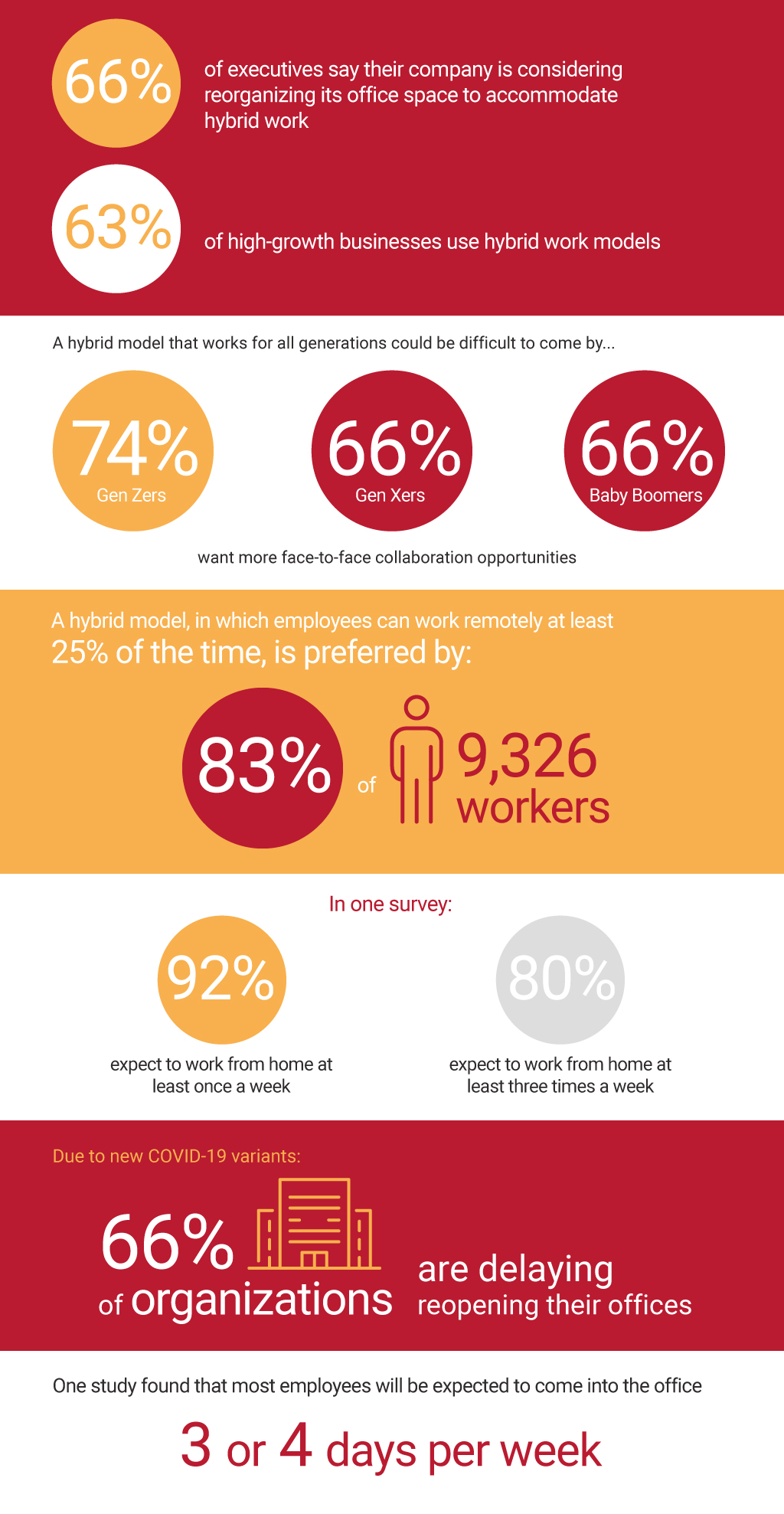
Remote and hybrid work, which have been with us in one form or another for decades, is now going mainstream and becoming an inevitable part of tomorrow’s post-pandemic office.

These work styles’ shift to the forefront may pose challenges for some businesses that resist change. Still, for most companies, they are already a necessity rather than a nice-to-have.

Enabling this future of work at scale and organisation-wide does require new cloud platforms and solutions to ensure both internal and external stakeholders are properly connected without suffering from any major communications or process breakdowns.

While decentralisation is a theme we’re hearing more about every day in the world of finance (DeFi), it is also a big theme in the workplace as we spread workers out over more locations and geographies – rates of people coming back to the office will likely increase for a while but are unlikely to reach pre-COVID levels.

Also Read: How to build a strong remote workforce for startups

While not without challenges of their own, these new arrangements do have a range of perks: better work-life balance, greater flexibility and autonomy, and more quality time between parents and their children.

For businesses, this cloud-enabled future of work structure is an asset to business continuity planning and resilience in the face of future shocks – and may even reduce costs associated with large, fixed offices.

Physical will remain, but digital will dominate

We yearn for in-person human interaction and camaraderie; that’s how we’ve evolved as a social species.

Despite that, the reality is that more –not less– of our teamwork and collaboration will move to digital channels, even as entertainment venues, trade conferences, restaurants, and offices reopen to larger groups in the year ahead.

While physical events and tradeshows, which we all love and miss, will return, they will do so with more implementation of digital platforms and solutions that coexist alongside the physical. For instance, paper business cards may continue to be exchanged, but QR codes may be scanned to exchange contact details alongside them.

At the office, even as more employees do return, we will not see the last of cloud platforms like Zoom, which came to prominence as a solution to remote work but are now even being used for group meetings when everyone is in the same building – simply owing to preferences around social distancing and convenience. 

This is just one example, but there are dozens of popular cloud platforms and solutions being used internally at organisations worldwide for work and collaboration. These will continue to be relied on and onboarded even after the pandemics’ worst is behind us.

My advice to businesses looking to start in earnest with their digital transformation (DX) in the year of the tiger is twofold: first, start with a small manageable pilot project in an area like digitising invoice management in the finance function; second, hire or designate a DX champion to champion and oversee these projects and push the cause internally with leadership and with staff at all levels. Buy-in is imperative for success.

Greening business by tackling our corporate paper addiction

ESG has taken the world by storm in 2021, and this trend will only continue as nations attempt to live up to their net-zero pledges made at COP26 in Glasgow.

This brings me to the third major trend I want to highlight for next year: the mainstreaming of ESG strategies at every private sector organisation and government department.

Also Read: A wave of change: What sets impact investing apart from traditional investing

Specifically, I’m calling out our collective corporate paper addiction and suggesting that business leaders recognise that reducing paper reliance within their business is a good starting point for ultimately reducing their carbon footprint.

This is no longer about just looking good: institutional investors, consumers, and governments are increasingly looking through an ESG lens as they choose capital allocation, tax breaks, and purchasing decisions based on the appeal of a company’s products and services.

Moreover, less paper and more digital in every organisation’s finance function may help reduce rates of some types of fraud, especially in emerging markets such as Southeast Asia, where it remains stubbornly high.

This leads to not only more sustainable business but also better governance.

I wish every company, big and small that’s grappling with these three themes – the future of work, the new physical-digital mix, and ESG factors – the best of luck in the year ahead. I’m confident that those who take these seriously (perhaps in the form of a corporate New Year’s resolution) will thank me this time next year.

Editor’s note: e27 aims to foster thought leadership by publishing views from the community. Share your opinion by submitting an article, video, podcast, or infographic.

Join our e27 Telegram group, FB community, or like the e27 Facebook page

Image credit: Elnur

The post 2022 tech forecast: An ESG-driven future of work and the new physical-digital mix appeared first on e27.